After reading my first Titbits article on Shiva Dhanush, one of our active blog readers had raised a curious question. “What happened to the Vishnu Bow- Sharanga?”
Let us read this line of the mythology story of Sarangapani (one of Lord Vishnu’s name, the possessor of the Sharanga bow) and how the divine bow was passed over the different Vishnu avatars.
Pinaka and Sharanga Combat
As I had mentioned in the Shiva Dhanush Titbit, the divine architect (Vishwakarma) had created two mighty bows and were given to Lord Shiva (Pinaka) and Lord Vishnu (Sharanga).
The devas (residents of heaven) wanted to test which one was more powerful and there are two popular versions of incidents narrated.

In the first version, everyone heard an asiriri (voice from heaven) that this test would be fatal and lead to the destruction of the universe. So, they gave up the duel and Shiva threw the Pinaka, which then came into the possession of King Janaka’s ancestors. Vishnu too, gave up his bow to a sage.
In a parallel version, it is narrated that Lord Vishnu uttered “Hum” which made Lord Shiva enter his yogic trance state. So, Lord Vishnu’s Sharanga was considered the winner of the combat. Lord Shiva then gave his Dhanush to the ancestors of King Janaka (which is common with the first version) and Vishnu also decided to pass on his bow to a deserving person.
Parashurama Avatar
Lord Vishnu gives his Sharanga to Sage Richika, which gets passed through his lineage. In the course of time, Grandson of Sage Richika, Parashurama, gets the possession of the divine bow.
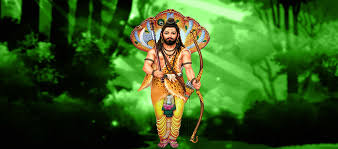
Parashurama is the sixth avatar of Lord Vishnu and is believed to be an immortal incarnation. He killed several kshathriyas (Kings) who misused their power.
Rama Avatar
When Lord Rama (belonging to kshathriya class) breaks the Pinaka in Sita Devi’s swayam-varam, Parashurama a great devotee of Lord Shiva was enraged by the act.
Parashurama confronts Lord Rama, though King Dasaratha (Rama’s father) intervenes and apologizes for his son’s act. Rama too apologizes and explains that he was intending to string and not break the bow. However, Parashurama was not convinced and challenged to string the Sharanga, twin bow of Pinaka. Lord Rama did string the bow which pacified Parashurama, who was convinced of Rama’s divinity and gave Lord Rama the divine bow.

Lord Rama uses the Sharanga bow in the war against evil and at the end of Rama Avatar, Sharanga reaches the abode of Lord Vishnu.
Krishna Avatar
In my second Titbit blog on Dwaraka, it was briefly mentioned that Lord Krishna and his brother Balarama had single handedly resisted King Jarasandha’s majestic attacks on city of Mathura, avenging his son-in-law, Kamsa’s death.
Lord Balarama and Krishna received Vishnu’s divine weapons in two chariots (including Sharanga – the bow) in the battle field and emerged victorious against the humongous army.
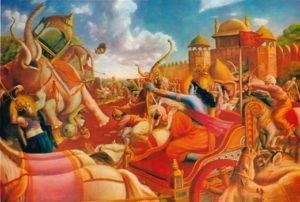
Sharanga, the divine bow slayed mighty demons and protected the world by restoring Dharma (righteousness) and once again reached Lord Vishnu’s abode by the end of Krishna Avatar.
Kalki Avatar
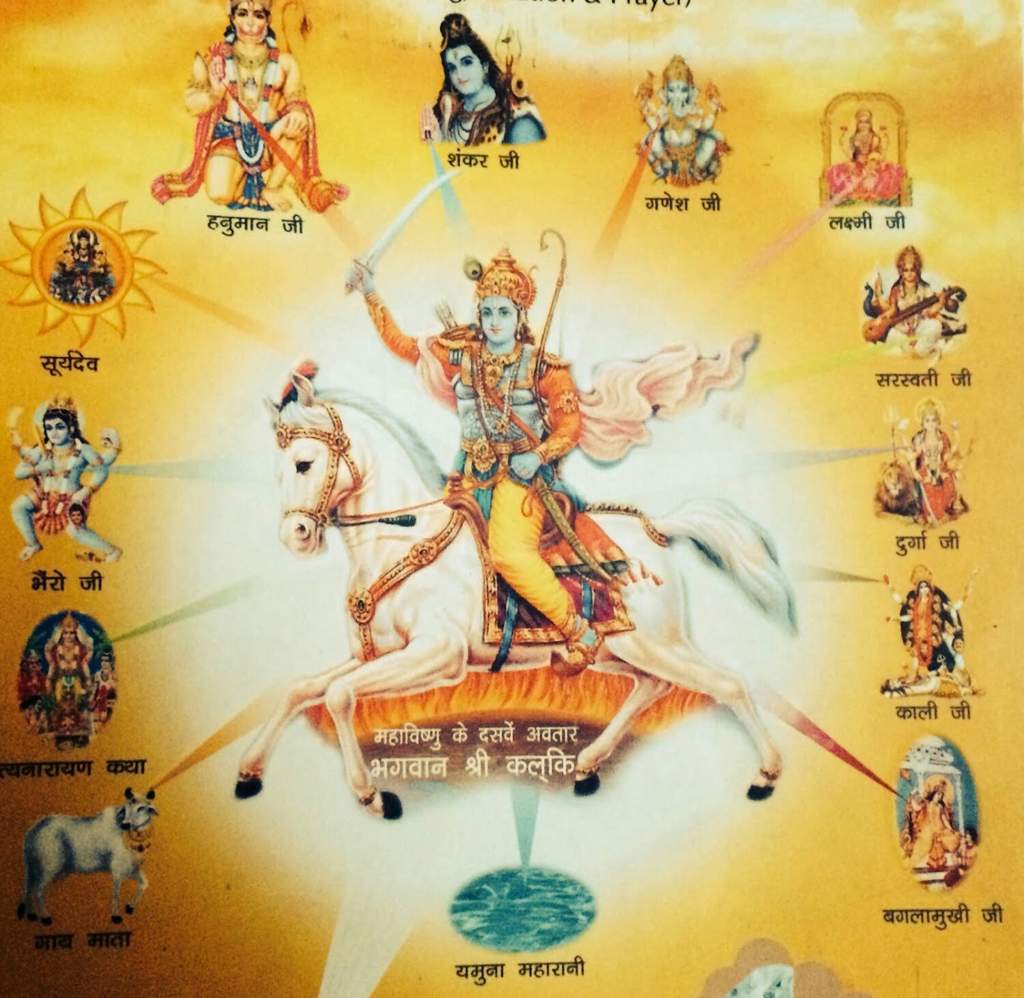
It is believed that Sharanga, the divine bow will be yielded by the tenth avatar of Vishnu, the Kalki avatar. Even in this avatar, Sharanga will continue to offer its allegiance to protect the noble and destroy the evil.
Did you know?
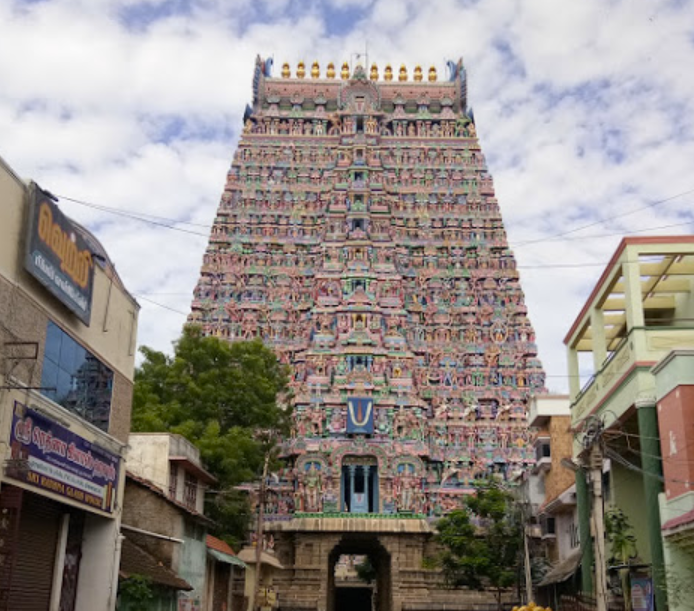
A temple for Sarangapani is built in the city of Kumbakonnam (South India, Tamilnadu) which has the tallest tower in the town. The procession deity of the temple holds the mighty, Sharanga bow.
The central shrine of the temple is in the form of chariot drawn by horses and elephants with giant wheels. The temple is dedicated to indicate the descent of Lord Vishnu from heaven to marry Goddess Lakshmi, born as Komalavalli.
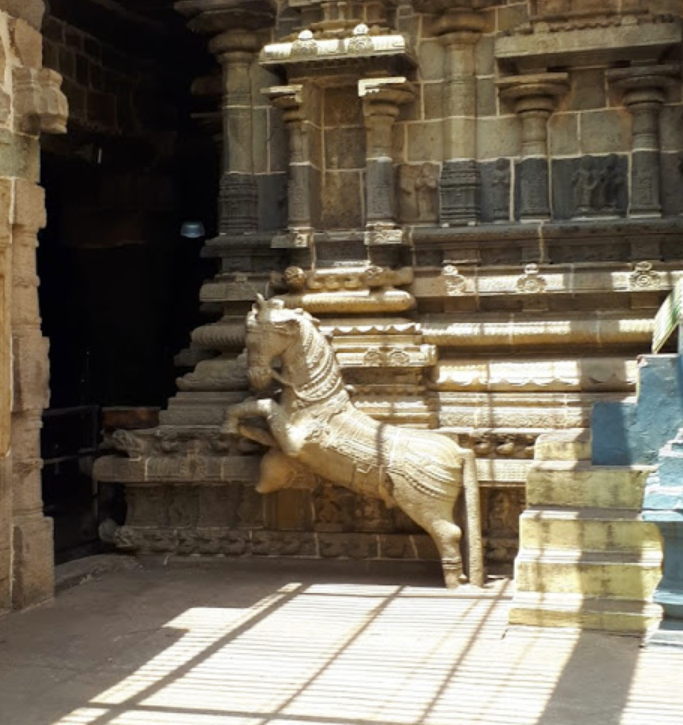
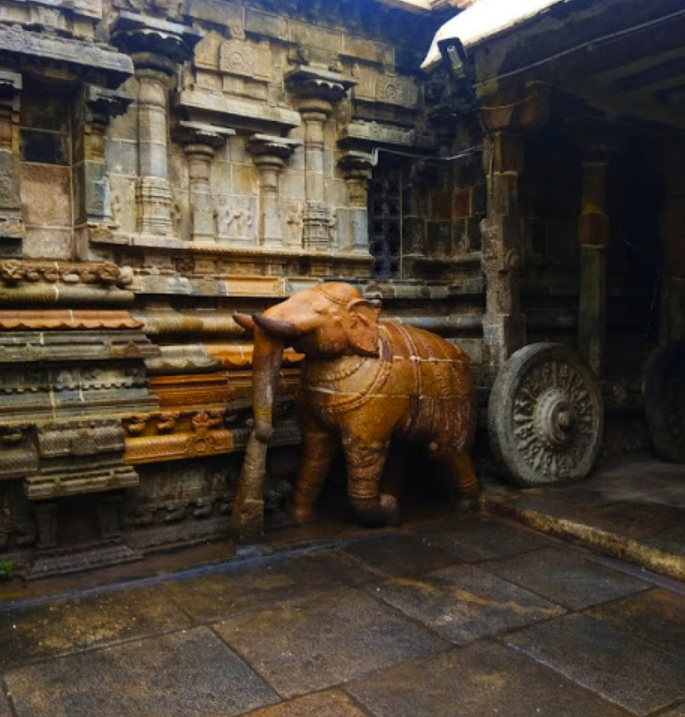
A specialty of the statue in the shrine is the Udhyoga Sayana posture (one of the nine sleeping postures of Lord Vishnu). With his head resting on his right hand, Lord Vishnu appears as if he is getting up from his sleeping position.
There is also the “Patala Srinivasa Perumal” (Patala – underground) shrine, which is indicative of Lord Vishnu residing in the underground chamber to avoid the anger of Goddess Lakshmi. She remembered the incident of Lord Vishnu not reacting to Sage Bhrigu, when the latter kicked on Vishnu’s chest (Lakshmi’s residence) to get his attention.
Goddess Lakshmi eventually forgives and marries the Lord Sarangapani!
Information Source and Photo Courtesy: Tamilnadu Tourism Blogspot
End-Note
Thanks for reading this post; please leave your feedback in the comment box below.
Check the Home page for the latest posts from our blog.
Browse the Blog page to find all the posts.
Visit the About page for the introduction to the blog.
Learn about the Research, Titbits, and Bliss sections of this blog.
To know the terms and conditions of this blog, please read the Norms page.
Go to the Contact page to message me and/or to find me on social media.
 DetectHistory.in