This Titbit page narrates the tale of Duhsala or Dussala or Dushala, the only sister of the Kauravas. Thanks to our regular blog reader, who suggested to write about this topic!
Dushala was the only daughter of King Dhritarashtra and Queen Gandhari. As an only princess and sister for the Kauravas and Pandavas, Dushala had a happy childhood.
Did the pleasures of her childhood last through her future? Read on to know all about Dushala…
Birth:
Queen Gandhari had received and looked over to the comfort of Sage Vyasa. He was pleased with her hospitality and granted her the boon to have one hundred sons. She got conceived and delivered only a lump of flesh (in another popular version, her pregnancy was aborted when she hit her stomach out of jealousy, when she heard the birth of the pandavas). When she was about to discard the flesh, the Sage appeared and assured his words will never go unfulfilled.

The Sage asked for a hundred pots filled with ghee (clarified butter) and was about to begin the process of splitting the flesh into one hundred pieces. At that instance, Gandhari expressed her desire to have a daughter in addition to the one hundred sons. So, the Sage split the flesh into 101 pieces and asked for an additional pot filled with ghee.
The pots were carefully stored until one hundred sons and a daughter were born.
Childhood and Marriage:
Dushala grew up under the guidance of the wise and elderly Bheeshma. She was showered with the love and happiness. Not only her brothers Kauravas, but Pandavas, her cousins too cared for their little sister.
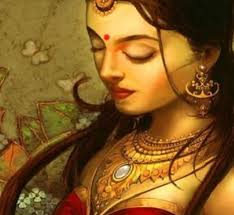
Dushala was married to Jayadratha, the powerful King of Sindhu and Sauvira.
Jayadratha:
Jayadratha meaning “Victorious Chariot” was mighty and powerful. Jayadratha had a disorder and harassed women. His behavior may (also) be because, he considered himself unpunishable upon his father’s boon (whosoever is the reason for making Jayadratha’s head fall on the ground, his head will shatter into a hundred pieces) and hence might have acted with disgrace.
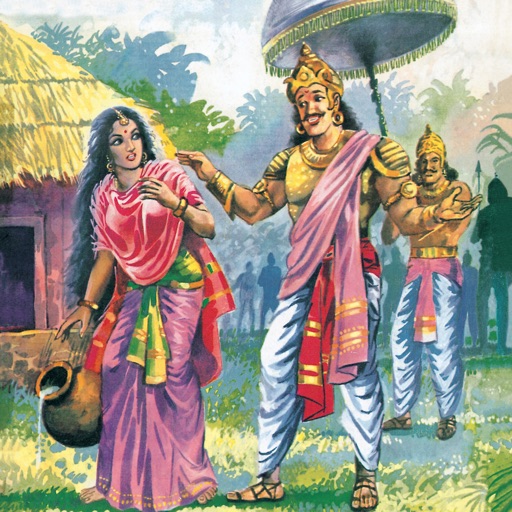
Dushala lead a life of misery and shame, because of her husband’s behavior.
Husband’s demise:
In the Kurukshetra Mahabharata war, Jayadratha controlled the Pandavas (except Arjuna, who was away fighting another army) and was the main reason for the brutal death of Abhimanyu (Arjuna’s son).

Arjuna took a vow to kill Jayadratha the next day. As per the instruction of Lord Krishna, Arjuna’s arrow beheaded Jayadratha and fell on his father’s lap. In shock, he stood and the head fell on ground, causing the death of Jayadratha’s father too.
Son’s demise:
After the loss of her husband in the war, Dushala continued to live with their son, Suratha ruling the kingdom.
King Yudishtra (eldest Pandava) conducted the Ashwamedha Yagna (a great Yagna, at the end of which the chief horse is made to run and yagna performer claims the rights of the lands covered by the horse. The land owner has a choice to surrender or fight) The Horse reached the Sindhu Kingdom and fearing the Pandavas, Suratha commits suicide.
Dushala was shattered and took the infant son of Suratha to Arjuna. She said “We need peace. Let us end this strife forever. No more never, this war”
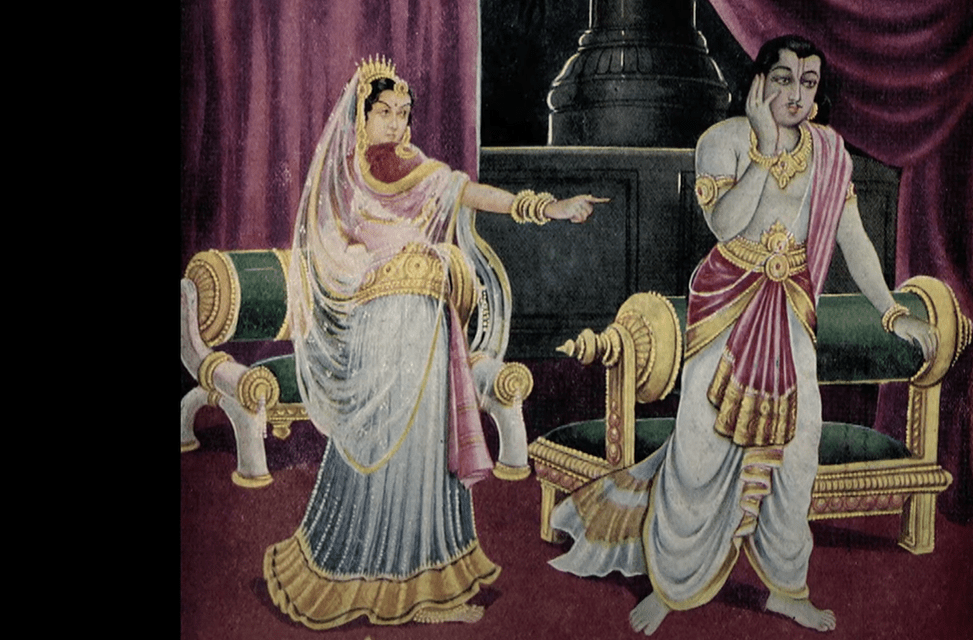
Arjuna felt guilty that he failed to protect his sister. He had caused her immense grief, by slaying her husband and now being the reason for her son’s death.
Arjuna crowns the infant as the future king of the Sindhu kingdom and peace is restored.
Last days of life:
Dushala continued to live in the Sindhu kingdom and in her later years, decided to live the life of austere in the forest of Southern India.
It is believed that she reached a paddy field (now in the state of Kerala) and began to dig for water using a branch of Jack tree. She also plants the branch nearby and this place is now called as “Pala Natta Kandam” or “Paalattukandam” (Pala – Jackfruit/tree, Natta- planted, Kandam- continent).

One of the shrines in Sri Malanada temple (Kerala) is dedicated to Dushala and the popular Kathakali play called “Arjuna Vishada Vruththam” focuses on Dushala as the main character.
Did you know?
There are two temples in India, where Duryodhana is worshipped as God – the Malanada temple in Kerala and Duryodhana temple in Osla, Uttarakhand.
In the Malanada temple, Duryodhana is worshipped as ‘Malayappooppan’ as a platform (no idol) and in this section, we will know about the reason for the temple and his noble behavior.
The legend is that Duryodhana came to Poruvazhi (a place in Kerala) in search of Pandavas when they were in exile. It was summer days and Duryodhana was tired. At that time, an old man who belonged to Kaduthasseri family (considered a low caste) came there and offered water and food to Duryodhana. The affection that the old man showed towards him touched the heart of Duryodhana. Duryodhana came near the old man to hug him, but the scared man moved away from Duryodhana saying that he belongs to a lower caste and not supposed to touch a Kshatriya who belongs to a higher caste. Then Duryodhana came closer to him and hugged him tightly and told that caste is determined by the Karma, not by the virtue of a person’s birth.
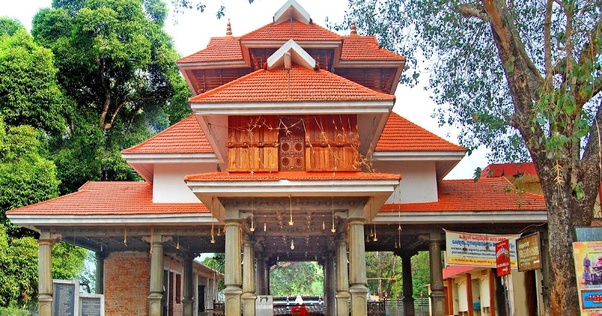
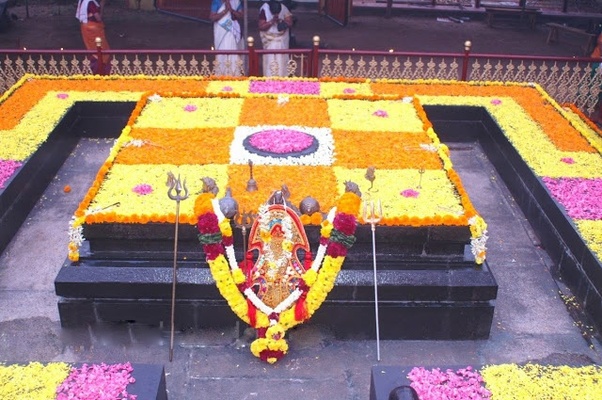
Before leaving, Duryodhana promised the old man that he will meet him once he accomplished his mission. However, Duryodhana could not find Pandavas and later he dies in the war. Once out of the body, his soul remembered the promise given to the old man of Kaduthasseri family and it moved to meet him.
On that night the old man had a dream in which Duryodhana appeared. Duryodhana apologized to the old man for not visiting him. Duryodhana also mentioned that he did not breach the promise as he could not accomplish his mission. He further said that he cannot forget the affection of the old man extended towards him on that day and he will live with him and his family members forever.
Waking up from the dream, the old man saw a divine light outside the home where there was a small banyan tree. The very next day morning, he placed a stone slab as a platform at that place and started worshipping Duryodhana. Even now, the members of Kaduthasseri are performing rituals at this temple.
News Source and Photo Courtesy: An article in Quora.comm, by Gourishankar Panicker
End-Note
Thanks for reading this post; please leave your feedback in the comment box below.
Check the Home page for the latest posts from our blog.
Browse the Blog page to find all the posts.
Visit the About page for the introduction to the blog.
Learn about the Research, Titbits, and Bliss sections of this blog.
To know the terms and conditions of this blog, please read the Norms page.
Go to the Contact page to message me and/or to find me on social media.
 DetectHistory.in