About the Post:
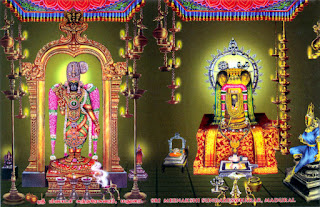
The sacred Tamil epic TIRUVILAYĀDAL PURĀNAM exclusively sings the glory of Goddess Meenakshi and Lord Somasundara of Madurai alias Tiru-Ālavāi, the capital city of Pandyan Kingdom. The epic mentions the great city wall of Tiru-Ālavāi, called ‘Ālavāi-madhil’, built by King Vangiyasekara Pandyan of the Pandyan Dynasty. This post is all about the probable archaeological remains of the Ālavāi-madhil.
Sneak Peek:
I have been trying for long to trace the archaeological remains of Ālavāi-madhil—the city wall of Tiru-Ālavāi alias Madurai—mentioned in TIRUVILAYĀDAL PURĀNAM. Finally, I believe I have discovered it; thanks to the internet. However, I find myself shocked and surprised about its location. Continue reading this post to learn more about it………
The TIRUVILAYĀDAL PURĀNAM:
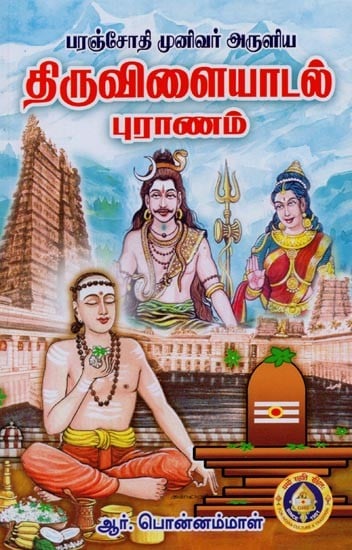
TIRUVILAYĀDAL PURĀNAM recounts 64 divine acts performed by the presiding deities of Kadamba-Vanam, the sacred entity better known as Madurai or Tiru-Ālavāi (also spelt as Tiruvālavāi). Paranjothi Munivar, the author of TIRUVILAYĀDAL PURĀNAM, has declared that his work is based on the Sanskrit Work HĀLĀSYA MĀHĀTMYAM. However, there are notable discrepancies between the two versions.
Madurai survived a Deluge:
Paranjothi Munivar’s TIRUVILAYĀDAL PURĀNAM, published by Varthamanan Pathippagam with commentary by V. Jothi, states that a pralaya (cosmic destruction) occurred during the reign of King Keerti Boodana Pandyan, who, once upon a time, ruled the Pandyan Kingdom from its capital city, Madurai. Incidentally, Keerti Boodana Pandyan was a lineal descendant of the divine couple Tadātagai (incarnation of Goddess Meenakshi) and Soundara Pāndyan (incarnation of Lord Somasundara). During the pralaya, the swollen seas overflowed and ruined the netherworlds, the earth, and the skies. However, the spire of Lord Somasundara’s shrine, the shrine of Goddess Meenakshi, and certain other sacred spots of ancient Madurai survived the deluge.
King Vangiyasekara Pandyan:
After the flood waters of the pralaya receded, God created the earth, demigods, humans, and other beings like before and made Tamil kings born in the Lunar, Solar, and Fire dynasties. Thus, Vangiyasekara Pandyan of the Lunar Dynasty became the ruler of the post-deluge Pandyan entity. His small city was built around the temple of Lord Somasundara. Due to his fair and mighty rule, the population of his dominion kept increasing. Hence, he wanted to expand his city. So, Vangiyasekara Pandyan went to the shrine of Lord Somasundara and prayed to Him to reveal the extent of the glorious Madurai City that had existed before the pralaya, so that he could expand his post-deluge Pandyan city accordingly.
Madurai became Tiru-Ālavāi:
In response to Vangiyasekara Pandyan’s prayers, Lord Somasundara appeared as a siddha (an enlightened intellectual person) with snakes as his ornaments. He then ordered the serpent that adorned His wrist to help Vangiyasekara Pandyan by revealing the territorial boundaries of the pre-flood Pandyan city. In obedience, the scary serpent proceeded towards the eastern direction and placed its tail firmly on the ground. Then it curved its body and laid itself on the ground as a huge circle by holding its tail with its mouth thereby encircling the portion of land that housed the pre-flood Pandyan city. Thus, it marked the territorial borders of the pre-flood Madurai City using its own body. Then, King Vangiyasekara Pandyan built a sky-scraping city wall named ‘Ālavāi-madhil’ along the boundaries traced out by the serpent. He also expanded his city within the boundaries revealed by the serpent to make it as glorious as the pre-flood Madurai City founded by King Kulasekara Pandyan, the paternal grandfather of Tadātagai. The thus-established megacity of Vangiyasekara Pandyan was called ‘Tiru-Ālavāi’ as per the boon obtained by the serpent from the siddha. In Tamil, ‘Tiru’ means “sacred”, ‘Ālavāi’ means “poison-mouthed” (i.e. snake), and ‘madhil’ means “the wall around a fort”.
Descriptions of Ālavāi-madhil:
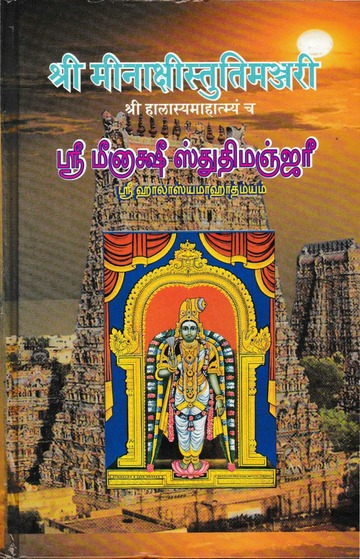
Dr S.V. Radhakrishna Sastri, in his abridged Tamil translation of HĀLĀSYA MĀHĀTMYAM, specifies the serpent’s name as Vāsuki and its gender as masculine. He identifies the small Pandyan city ruled by Vamsa Sekara Pandyan (i.e. Vangiyasekara Pandyan) as the post-deluge Madurai City, which later, after its expansion, obtained the name ‘Sri-Hālāsya’. He particularly mentions the serpent’s natural zig-zag movements during its efforts to reveal the territorial borders of the pre-flood Madurai City to Vamsa Sekara Pandyan. Dr S.V. Radhakrishna Sastri states that the serpent first placed its tail in front of the temple entrance and then brought its mouth to its tail, encircling the land that housed the pre-flood Madurai City. He adds that the city wall built by King Vamsa Sekara Pandyan, along the boundaries traced out by the serpent, Vāsuki, was called ‘Vāsuki-madhil’. He further states that the king expanded his city within the boundaries marked by the serpent and named it ‘Hālāsyam’ (i.e. ‘Hālāsya’, Tamilized). These details are in the book SRI MINAKSHI STUTI MANJARI AND SRI HĀLĀSYA MAHATMYAM, published by Sri Mahaperiyaval Trust, Bangalore. The book also contains the unabridged HĀLĀSYA MAHATMYAM in Sanskrit, which mentions King Vangiyasekara Pandyan’s name as Vamsha Shekara Pandya. In Sanskrit, ‘Sri’ means “sacred” and ‘Hālāsya’ means “poison-mouthed” (i.e. snake).
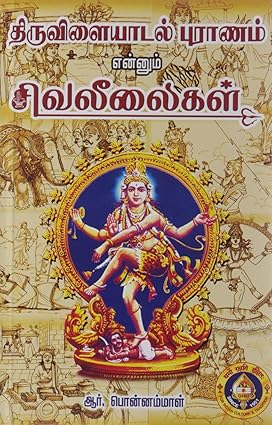
Writer R. Ponnammal, in her book TIRUVILAYĀDAL PURĀNAM ENNUM SIVA LEELIGAL, published by Giri Trading Agency, states that the serpent told King Vamisa Sekara Pandyan (i.e. Vangiyasekara Pandyan) that the boundary marking would be zig-zag owing to its natural zig-zag movements. She adds that the serpent requested the king to name the fort, which he would thus build with zig-zag curvatures, in its honour. She further says that the king expanded his post-deluge Pandyan city as per the boundaries revealed by the serpent and called it ‘Ālavāi’ (meaning “poison-mouthed” in Tamil). However, R. Ponnammal, in her book, has mostly mentioned the Tiru-Ālavāi also as Madurai (i.e. the post-deluge Madurai).
Vāsuki – The King of Serpents:
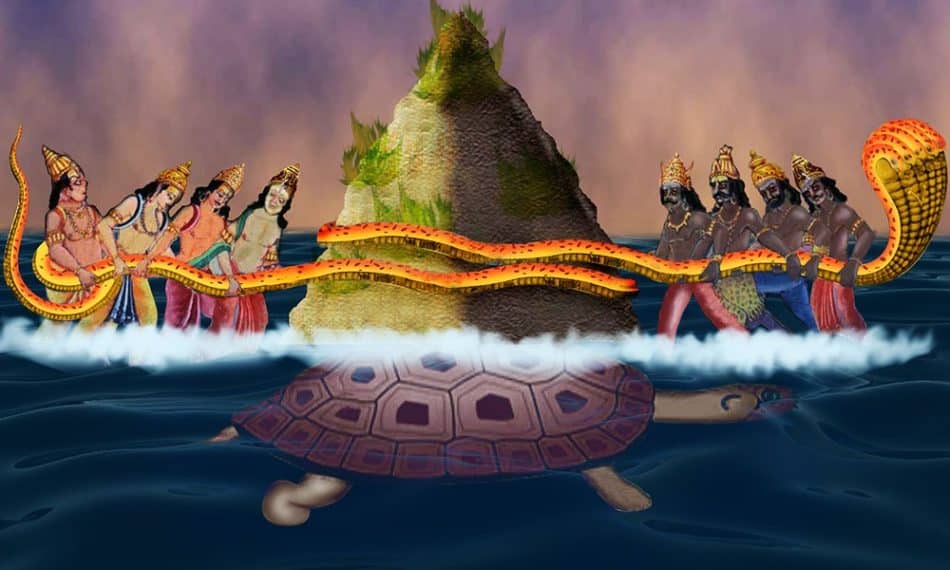
According to the Puranic story of Samudra-manthan, the churning of the ocean by Devas and Asuras, Mandāra Mountain was used as the churning stick and serpent Vāsuki was used as the churning rope. This story implies that Vāsuki was an extraordinarily long and mighty serpent. Thus, it is no wonder Vāsuki could encircle the land that housed the pre-flood Madurai City. Owing to its incredible length, Vāsuki most likely deployed the zig-zag movement only until it covered a certain distance while accomplishing the task. So, it is quite possible that only a specific portion of the city wall built by King Vangiyasekara Pandyan had zig-zag curvatures.
The Transparent Truth:
The present-day Madurai, also known as Tiru-Ālavāi, in the southern Indian state of Tamil Nadu, was unmistakably an important Pandyan entity in Indian History. However, the geographical and archaeological facts of modern Madurai/Tiru-Ālavāi do not seem to agree with the relevant details found in TIRUVILAYĀDAL PURĀNAM. This puzzling discrepancy kept persuading me to find out the location of the ancient Madurai/Tiru-Ālavāi, which the TIRUVILAYĀDAL PURĀNAM speaks of. So, I started searching on the internet for the archaeological structure that would align with the descriptions of Ālavāi-madhil, and I believe I have finally located it.
Identifying the Ālavāi-madhil:
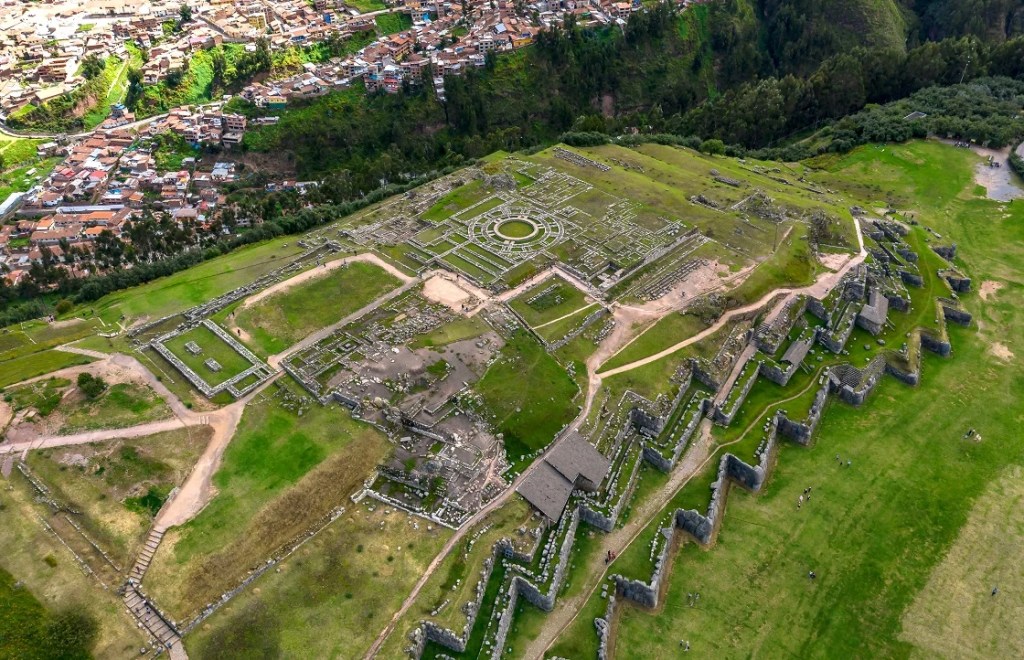
The only archaeological site where we can find a zig-zag fortress wall is Sacsayhuaman situated north of Cusco in Peru, South America. According to modern archaeologists, it was built by the Inca Civilization in the 15th century CE/AD. Nonetheless, Graham Hancock, in his book FINGER-PRINTS OF THE GODS, has written as follows:
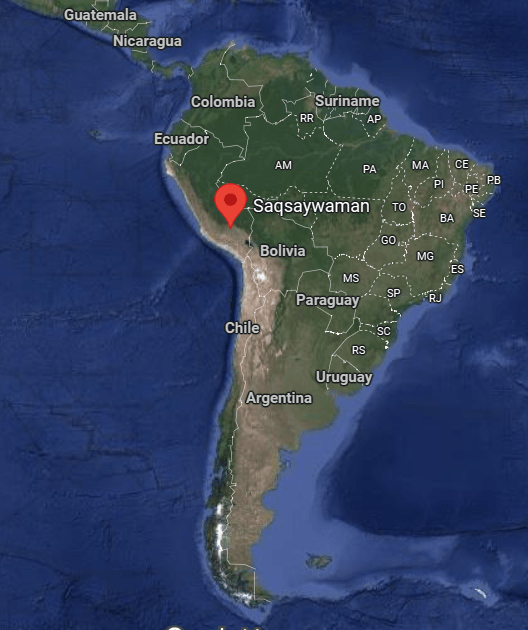
“I had already been impressed by the quality of Inca stonework in Cusco. As my research in the old town continued, however, I was surprised to discover that by no means all the so-called Inca masonry could be attributed with any degree of archaeological certainty to the Incas. It was true that they had been masters in the manipulation of stone, and many monuments in the Cusco area were indisputably their work. It seemed, however, that some of the more remarkable structures routinely attributed to them could have been erected by earlier civilizations; the evidence suggested that the Incas had often functioned as the restorers of these structures rather than their original builders.”
In the same book, Graham Hancock has made the following statements also:
“Since it was known that the Incas had made intensive use of Sacsayhuaman I could easily understand why it had been assumed that they had built it. But there was no obvious or necessary connection between these two propositions. The Incas could just as well have found the structures already in place and moved into them.”
The website Britannica.com contains the following statements about Sacsayhuaman:
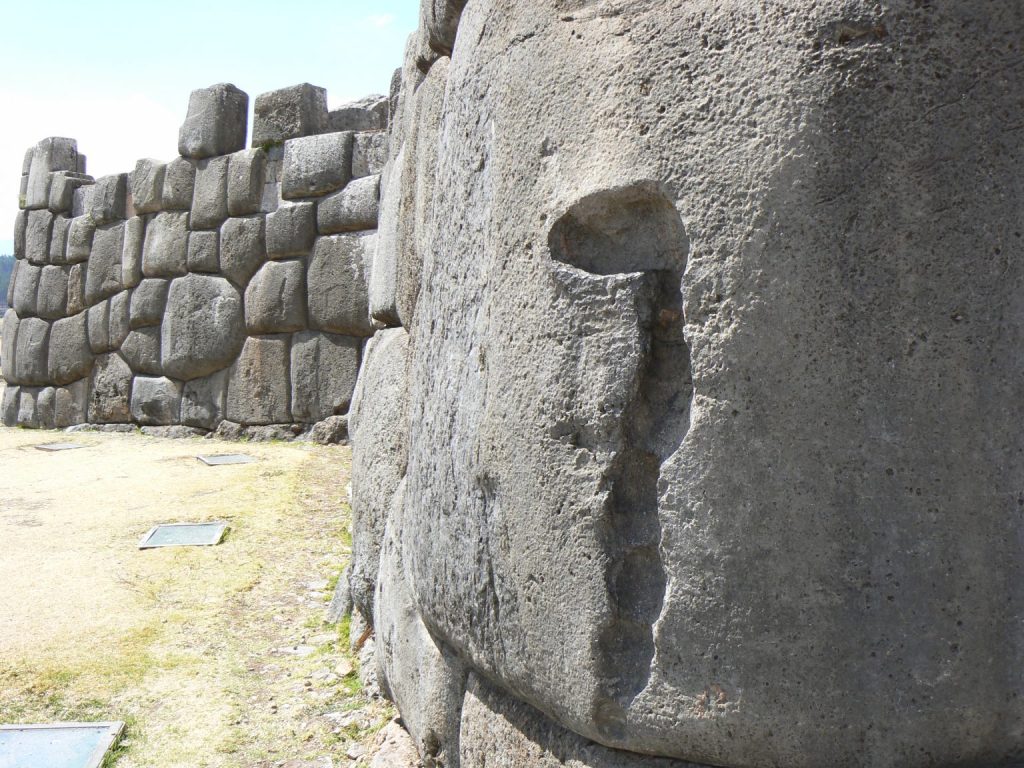
“The purpose for which Sacsayhuamán was built is uncertain. The walls and original towers seem clearly defensive in nature. The site also incorporates a large plaza surrounded by terraces, and it is thought that this area may have been used for ceremonies. In addition, it is thought that there were temples in the complex. In 2008, archaeologists uncovered the ruins of a pre-Inca temple and roadway at the site’s periphery. Sacsayhuamán is known to have been the site of a fierce and bloody battle between the invading Spanish and the ruling Inca in 1536. Although the walls appear huge today, it is known that they were originally even more imposing, as the Spanish used all but the heaviest stones to build Spanish Cuzco. The site was covered over, not to be seen until Peruvian archaeologists found it again in 1934.”
The following excerpt is from the book UNRAVELING SACSAYHUAMAN authored by Andreas Michaelides:
“After the Spanish conquest, Sacsayhuaman lost its former glory and significance. The Spanish dismantled much of the fortress and used its stones to build structures in Cusco, including the Cathedral and other colonial buildings.”
The above excerpts seemingly convey that the zig-zag cyclopean stone walls of present-day Sacsayhuaman are most probably the remains of a fortress built much before the period of historical Incas. Thus, perhaps they are the archaeological remains of the Ālavāi-madhil built by King Vangiyasekara Pandyan.
Closing Message:
KALI-THOGAI, a Sangam literary work, not only mentions the submergence of a Pandyan land but also hints at the resultant migration of survivors to other entities. This ancient Tamil account probably recounts the relocation of inhabitants of the Madurai glorified by TIRUVILAYĀDAL PURĀNAM, owing to the deluge mentioned in the epic. Incidentally, naming a new homeland in memory of the native land was an apparent tradition in ancient times. Moreover, a few other details in TIRUVILAYĀDAL PURĀNAM also seem to suggest that the Madurai founded by King Kulasekara Pandyan, which later became the Tiru-Ālavāi established by King Vangiyasekara Pandyan, was located in the Americas. I might discuss these points in some future posts on this blog. Thus, I infer that the Madurai alias Tiru-Ālavāi, glorified by TIRUVILAYĀDAL PURĀNAM, was most likely located in the Americas. Therefore, I believe that the zig-zag cyclopean stone walls of present-day Sacsayhuaman are, in fact, the archaeological remains of the Ālavāi-madhil built by King Vangiyasekara Pandyan.
End-Note:
Thanks for reading this post; please leave your feedback in the comment box below.
Check the Home page for the latest posts from our blog.
Browse the Blog page to find all the posts.
Visit the About page for an introduction to the blog.
Learn about the Research, Titbits, and Bliss sections of this blog.
To know the terms and conditions of this blog, please read the Norms page.
Go to the Contact page to message me and/or to find me on social media.
 DetectHistory.in