About the Post:
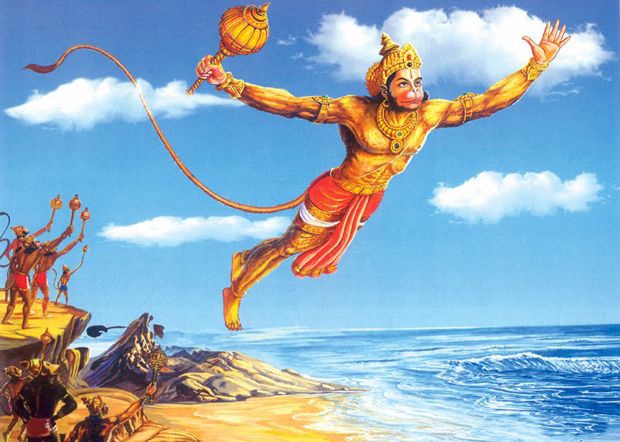
The ancient Indian epic Ramayana, which sings the glory of Lord Rama and his consort Devi Sita, needs no introduction to South Asians and the South East Asians. Hanuman flying to Ravana’s Lanka in search of Sita is an interesting episode in the epic. As per the Ramayana, Hanuman took off from Mahendra parvata (Mahendra Mountain) and flew across the ocean to reach Lanka. This blog post is about identifying the Mahendra Mountains specified in the Ramayana.
Sneak Peek:
The Mahendragiri of Odisha is widely believed to be the Mahendra parvata from where Hanuman flew to Lanka. However, it seems Ramayana points to the present-day Ijen Volcano in Indonesia as the place from where Hanuman took off to Lanka. Continue reading this post to judge if I am right or wrong………
The Ramayana Period:
‘Ramayana’, authored by Sage Valmiki, narrates the story of Lord Rama and his consort Devi Sita. Incidentally, Valmiki was a contemporary of Rama and Sita. As I interpreted from some ancient Indian Puranas, Lord Rama was born in the 24th Treta-yuga of the ongoing Vaivasvata-manvantara. Suppose this date is true, it means Ramayana happened about 18 million years ago, which, according to the geological time scale, was during the Early Miocene Epoch.
Mt Mahendra and the Ijen Volcano:
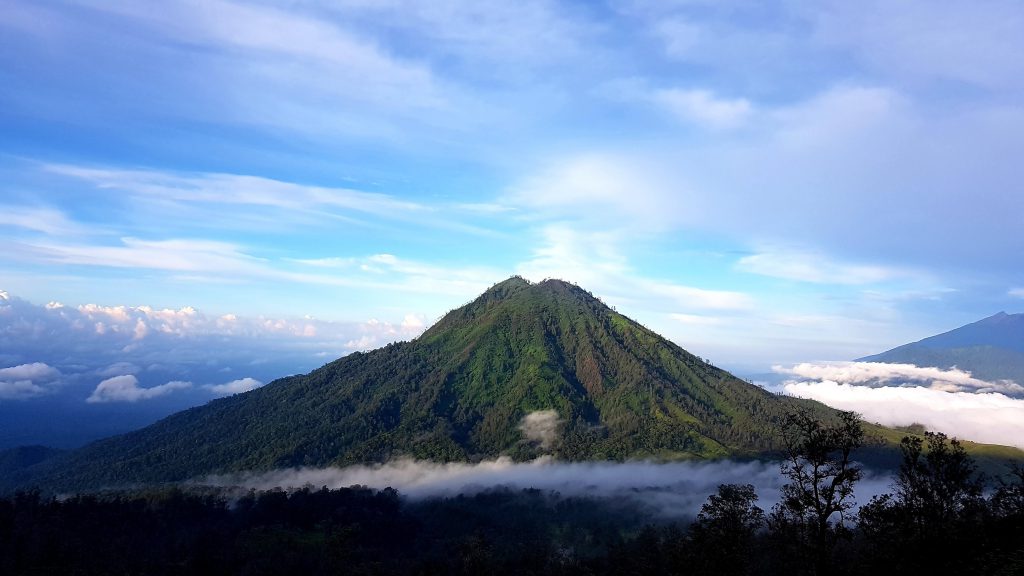
THE VALMIKI RAMAYANA (Volume 2) by Bibek Debroy, published by Penguin Books, narrates Hanuman’s solo expedition to Lanka in search of Rama’s wife Sita, who was abducted by Ravana, the king of Lanka. The vivid narratives include some descriptions of Mahendra Mountain, from where Hanuman leapt across the ocean towards Lanka. The details in the descriptions seem to point to the present-day Kawah Ijen Crater Lake of the Ijen Volcano Complex in East Java, Indonesia, as the spot from where Hanuman took off to Lanka.
Page 253: “To accomplish your objective, you will then approach the ocean, with the handsome Mount Mahendra………… Agastya had placed the base of this mountain inside the ocean and the peak can be seen above the great ocean.” (These words were spoken by Sugriva to Hanuman and the other apes who were supposed to search for Sita in the southern regions of Earth)
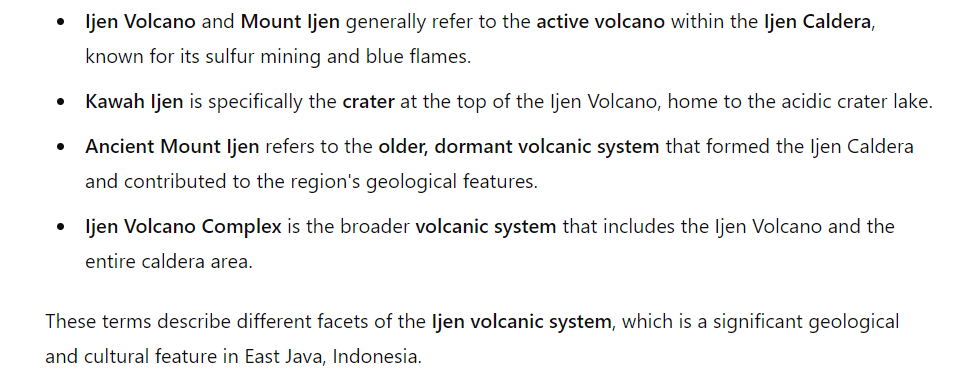
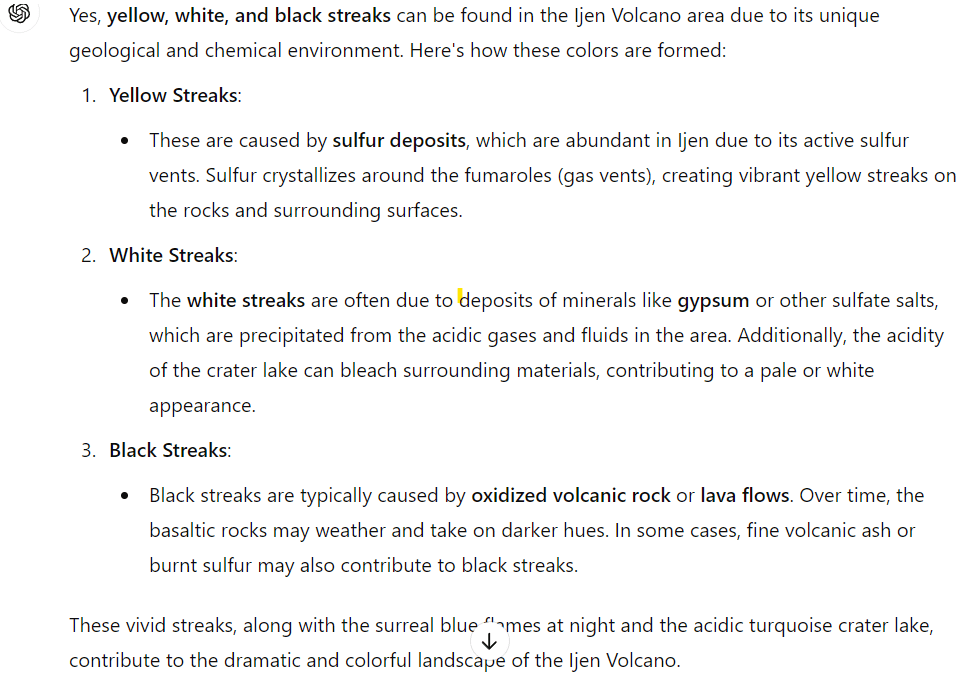
‘Gravity Analyses And Crustal Structure Of The East And Eastern Java Sea, Indonesia‘, a research paper by Agus Guntoro, Sardjono, and John P. Steven Guntoro states that the Late Oligocene to Early Miocene was the time of regional sea-level rise throughout the East Java Basin due to eustatic sea level rise and general tectonic subsidence, especially in the onshore area. This statement indicates the plausibility that the surroundings of the Ijen Volcano were submerged by the sea waters during the Ramayana Days. Now, let me tell you why I identify Mount Ijen as the Mahendra Mountain of Ramayana. But before that, please go through the following Chat GPT information on the different ‘terms’ concerning the Ijen Volcano.
Page 306: “Like an elephant, the ape stood in a lake there. This was decorated with colourful and natural minerals on the rocks—blue, red, yellow, green like leaves, black and white.” (This sentence refers to a lake on Mahendra Mountain in which Hanuman stood ready to take off to Lanka)
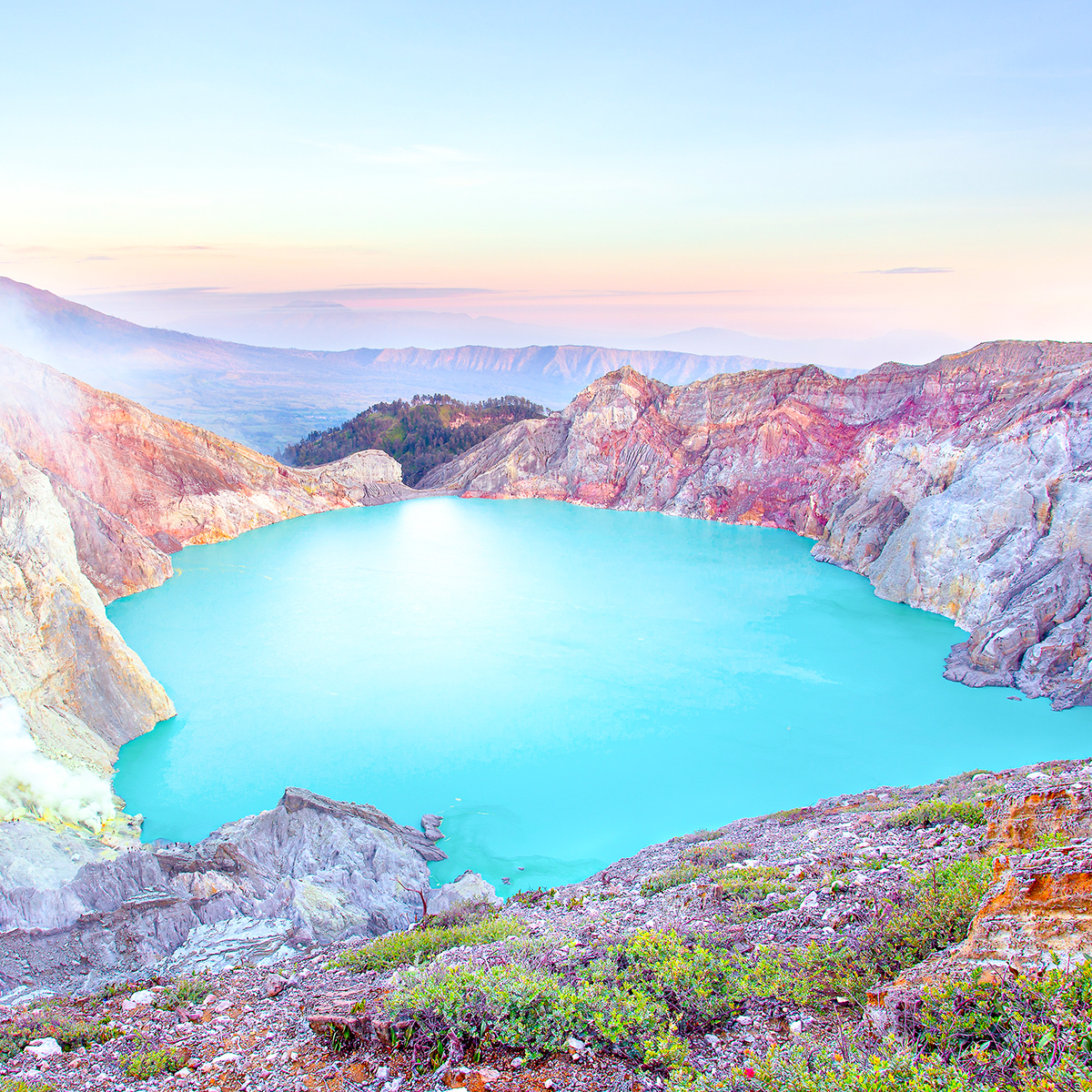
The Ijen volcano complex is a group of composite volcanoes in East Java, Indonesia. It is known for its acidic crater lake called Kawah Ijen Crater Lake. The Ijen Volcano Complex is inside the eponymous Ijen Caldera, which is about 20 kilometres wide. It is stated that the caldera formation is not well constrained but occurred between 300,000 (the youngest dated pre-caldera deposit) and 50,000 (the oldest dated post-caldera deposit) years ago through the collapse of Old Ijen stratovolcano. However, the Kawah Ijen Crater Lake seemingly align perfectly with the descriptions in Ramayana. Therefore, I believe the crater, with the lake, to have existed since at least the Ramayana Period.

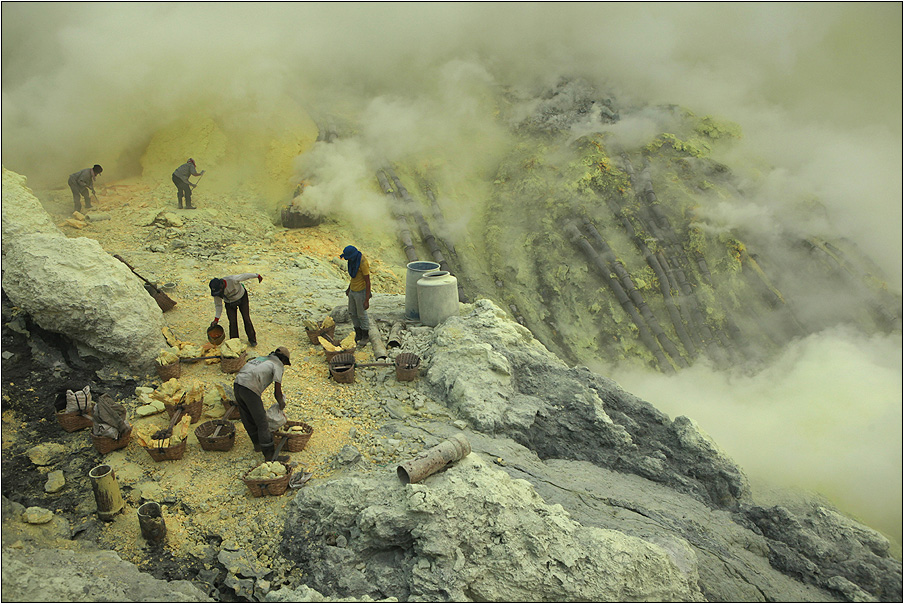
Page 307: “There were large rocks and rocks that were filled with sulphur.” (This sentence refers to the rocks near the lake on Mahendra Mountain, in which Hanuman was standing ready to fly to Lanka)
Kawah Ijen Crater Lake, according to Wikipedia, is the site of a labour-intensive sulphur mining operation, in which sulphur-laden baskets are carried by hand from the crater floor.
Page 307: “The strong one made Mount Mahendra suffer. Streaks of gold, silver and collyrium appeared.” (In this sentence, the phrase “the strong one” refers to Lord Hanuman)

Based on the above information provided by Chat GPT, I interpreted the words ‘gold’, ‘silver’, and ‘collyrium’ as ‘yellow’, ‘white,’ and ‘black’. Incidentally, Chat GPT confirmed the presence of yellow, white, and black coloured streaks in Ijen Volcano.
Closing Message:
‘THE REAL LANKA OF RAMAYANA‘, published on this blog in February 2021, deduced that Ravana’s Lanka was most probably located in the landmass now known as Antarctica. This article identifies the present-day Ijen Volcano as the plausible Mahendra Parvata of Ramayana Days, from where Hanuman flew to Lanka. Incidentally, these conclusions perfectly align with Ramayana’s statement (Page 306 of Penguin Books’ THE VALMIKI RAMAYANA, Volume 2, by Bibek Debroy) that Lord Hanuman flew towards the southern direction from Mahendra Mountain to reach Lanka.
End-Note:
Thanks for reading this post; please leave your feedback in the comment box below.
Check the Home page for the latest posts from our blog.
Browse the Blog page to find all the posts.
Visit the About page for an introduction to the blog.
Learn about the Research, Titbits, and Bliss sections of this blog.
To know the terms and conditions of this blog, please read the Norms page.
Click Contact to send me a message or to find me on social media.
 DetectHistory.in
New information and great exploration. Looking forward for your analysis. Great one!!
LikeLiked by 1 person
Thanks a lot for your encouraging feedback Ms Nandhini 😊🙏🏻
LikeLike
very nice explanation. Neat and clear
LikeLiked by 1 person
Thank you so much Ms Aarthi. I am glad that you like my article 😊
LikeLike