About the Post:
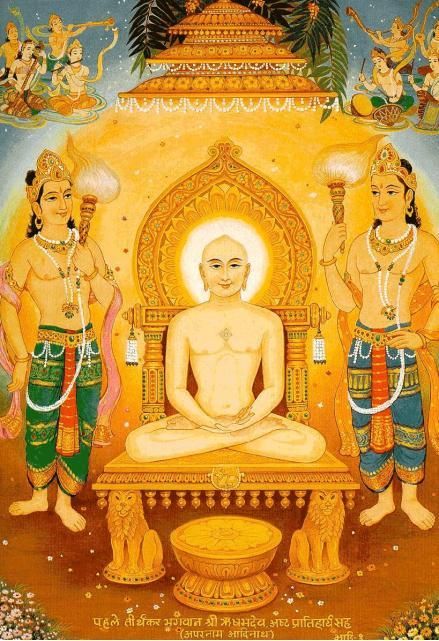
Ādinath alias Rishabhanāth, according to Jainism, is the first king and the first tīrthankara of the present avasarpinī who lived millions of years ago. When Rishabhanāth was a king, he had two wives, Sumangalā and Sunandā, through whom he became the father of 100 sons and 2 daughters. Sacred texts of the Jain Religion state that Rishabhanāth attained salvation at the Ashtāpad Mountain. After Rishabhanāth left his mortal frame, his son Bharat built a temple/palace with precious stones on Ashtāpad Mountain to commemorate his father’s spiritual achievement. Since then, it has been the most significant pilgrimage destination for the Jains, called Shri Ashtāpad Mahā-tīrth. But since its location is now unknown, it is currently considered lost.
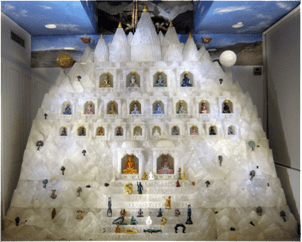
the Jain Research Centre of America
Owing to my inherent respect for Bhagavān Rishabhanāth, I have been trying since 2023 to identify the Ashtāpad Mountain. Finally, I believe I have traced its plausible location by the grace of the almighty, and hence this article about the actual Ashtāpad. No words can express my profound happiness about this post being published in January 2025 because the Rishabhadev Moksha Day of the current Jain Year falls on 28/01/2025, the 4th anniversary of this blog.
Sneak Peek:
The location of Ashtāpad Mountain, glorified by the scriptures of the Jain Religion, is currently unknown. However, I found clues relevant to it in certain Hindu Puranas. Continue reading this post to learn about the probable location of the sacred mountain………
The Ashtāpad Mountain:
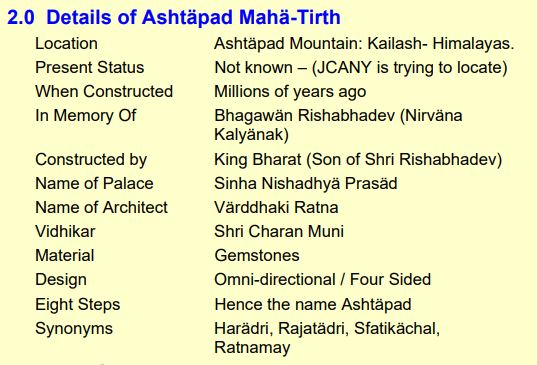
The Jain Research Centre of America has published a pamphlet about the imagined replica of Shri Ashtāpad Mahā-tīrth installed by it in a Jain temple in New York, USA. The pamphlet contains significant details about the Ashtāpad Mountain and the temple/palace built on it by King Bharath to memorialise his father Rishabhanāth. Page 19 of the pamphlet mentions that Ashtāpad Mountain is probably up in the Himalayas, about 168 miles north of Badrinath, a town in the Indian state of Uttarakhand. However, certain clues from Hindu purānas seemingly hint that the sacred mountain is at a different location.
According to page 10 of the pamphlet, Shri Ashtāpad Mahā-tīrth is situated in a tranquil region on the snow-covered Himālayan Mountains and is open to the skies. It is also known by several other names like ‘Ratnamay’ (a palace made of gemstones which houses idols of 24 tīrthankaras made of gemstones), ‘Rajatādri’ (‘Rajat’ means “silver” and ‘Adri’ means “mountain”; Ashtāpad Mountain is snow-covered and looks like silver), and Sfatikāchal (a mountain of crystal; ‘Sfatik’ means “crystal” and ‘Achal’ means “mountain”). Page 7 of the pamphlet states that according to ABHIDHĀN CHINTĀMANI (ref 4-94), Mount Kailāsa has many names: Rajatādri, Ashtāpad, Sfatikāchal, Harādri, Himavat, and Dhawalgiri.
The English translation of the Jain Scripture TRISHASHTI SHALĀKĀ PURUSHA CHARITRA by Helen M. Johnson states: With the idea, “Men must not cause damage here by coming and going,” the King had mechanical iron guardsmen made. Because of these mechanical iron guardsmen the place became as inaccessible to men as if it were outside the world. The Lord of Jewels cut off the projections on the mountain with the staff-jewel, and it, straight, became as impossible for men to climb as a pillar. The King made eight steps around it in the form of terraces impossible for men to cross and a yojana apart. From that time the mountain was called ‘Aṣṭāpada.’ Among the people it was known as ‘Harādri,’ ‘Kailāsa,’ and ‘Sphaṭikādri.’
Clues in Hindu Purānas:
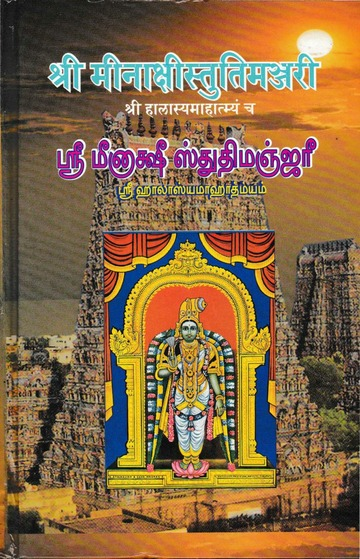
‘SRI MINAKSHI STUTI MANJARI AND SRI HALASYA MAHATMYAM’, published by Sri Mahaperiyaval Trust, Bangalore, includes Dr S.V. Radhakrishna Sastri’s Tamil translation of some excerpts from GURU GITA, claimed to be a part of the Sanskrit scripture SKĀNDA PURANAM. Page 121 of the book states that Kailasa Mountain is amidst the Meru Mountains. It adds that the silver peak amidst Kailasa Mountain is called ‘Rajatāchalam’. Page 800 of the book informs that the Chera, Chola, and Pandya countries were located south of the Meru and the Himālayas.
Based on certain clues from Dr S.V. Radhakrishna Sastri’s abridged Tamil translation of HĀLĀSYA MĀHĀTMYAM (in the above mentioned book), Paranjothi Munivar’s TIRUVILAYĀDAL PURĀNAM (published by Varthamanan Pathippagam with commentary by V. Jothi), and TIRUVILAYĀDAL PURĀNAM ENNUM SIVA LEELIGAL (authored by R. Ponnammal and published by Giri Trading Agency), I had already deduced that the Madurai alias Tiru-Ālavāi of the distant past (capital city of the Puranic Pandyas) was most likely located in the Americas. So, I inferred that the Meru and the Himalayas, mentioned in the GURU GITA, are in the Americas.
My Interpretations:
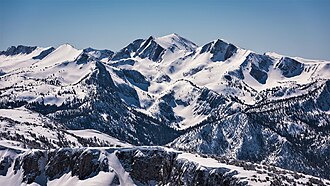
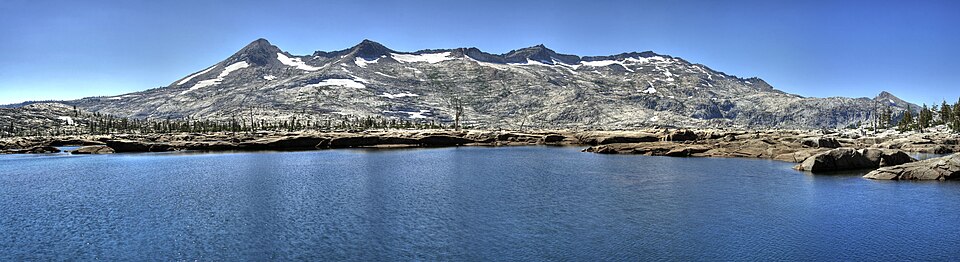
The Sierra Nevada (literally “snowy mountain”) in North America apparently fits into some of the significant details of Ashtāpad Mountain found in the pamphlet published by the Jain Research Centre of America. I perceive the Silver Peak and the Crystal Range of Sierra Nevada as the plausible factors behind the terms ‘Rajatādri’/’Rajatāchalam’ and ‘Sfatikāchal’ that, as per the pamphlet, are associated with Ashtāpad Mountain. Therefore, I believe that the Ashtāpad Mahā-tīrth established by King Bharat, the son of Rishabanāth, is somewhere in the Sierra Nevada Mountain Range of North America.
Closing Comments:
Thus, I am convinced that the Sierra Nevada is the Himālaya/Kailāsa associated with the Ashtāpad Mahā-tīrth. By the way, since HĀLĀSYA MĀHĀTMYAM states that Kailāsa is amidst the Meru Mountains, I believe the Meru that it mentions is most probably either the entire North American Cordillera or a particular mountain range of it.
End-Note:
Thanks for reading this post; please leave your feedback in the comment box below.
Check the Home page for the latest posts from our blog.
Browse the Blog page to find all the posts.
Visit the About page for the introduction to the blog.
Learn about the Research, Titbits, and Bliss sections of this blog.
To know the terms and conditions of this blog, please read the Norms page.
Go to the Contact page to message me and/or to find me on social media.
 DetectHistory.in
wow nicely explained the jain hagawan Rishbanath and Astapath mountain. Didnt even know about this earlier. Thank you so much for giving us nice informations. Keep giving us more
LikeLiked by 1 person
Thanks for your encouraging comments Ms Aarthi; it means a lot to me.
LikeLike
spectacular! International Community Expresses Concern Over [Situation] 2025 outstanding
LikeLike
Thanks for your respose to my article, but I am not able to understand your message. Can you please enlighten me on the same?
LikeLike