About the Post:
“Khirsara in Kutch is emerging as the next most important Harappan site after Dholavira and Lothal in Gujarat.”, announced The Times of India about a decade ago; we are going to explore this interesting Harappan site in this post.
Sneak Peek:
I believe Mahabharata to be the historical record of Harappans. Does Mahabharata contain any clue about Khirsara? Read on to know more………
Khirsara:
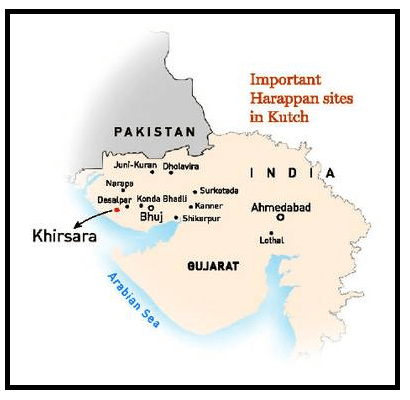
(Image Courtesy: Frontline-The Hindu)
“The four seasons of excavations at Khirsara (23º50ʹN: 69º05ʹE), a mature Harappan site in district Kachchh, Gujarat has opened a new chapter in the Harappan Archaeology. Archaeological reconnaissance here has revealed separate fortified enclosures for Citadel, Warehouse, Factory area and Residential annex within a general outer fortification.”, states the abstract of a journal paper titled ‘Khirsara – A Harappan Metropolis in Western Kachchh, Gujarat, India‘, authored by archaeologists Jitendra Nath and R. N. Kumaran.
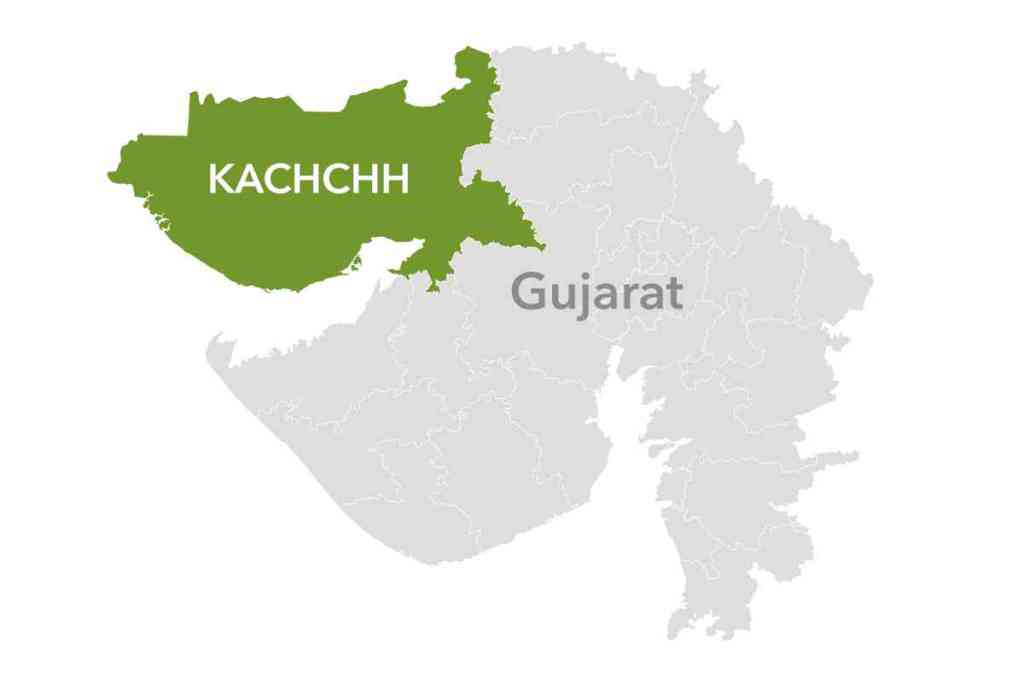
(Image Courtesy: Aathira Perinchery, Scroll.in)
Khirasara is a village in Nakhatrana Taluka of Kutch District (also spelt as Kachchh District) in the western Indian state of Gujarat. On the south-eastern outskirts of the present-day village of Khirsara lies a Harappan archaeological site, locally known as ‘Gadhvadi’/‘Gadhwali Wadi’ (also spelt as ‘Gadhvali Vadi’); it overlooks the Khari River and is situated 85 km north-west of Bhuj, the district headquarters. The site has been known ever since the 1970s. However, ASI started a major excavation effort only in December 2009 and continued for the next three years. Khirsara, though not as big as Dholavira, was evidently a well-planned fortified settlement and a major industrial hub of the Mature Harappan Period (circa 2565 to 2235 BCE).
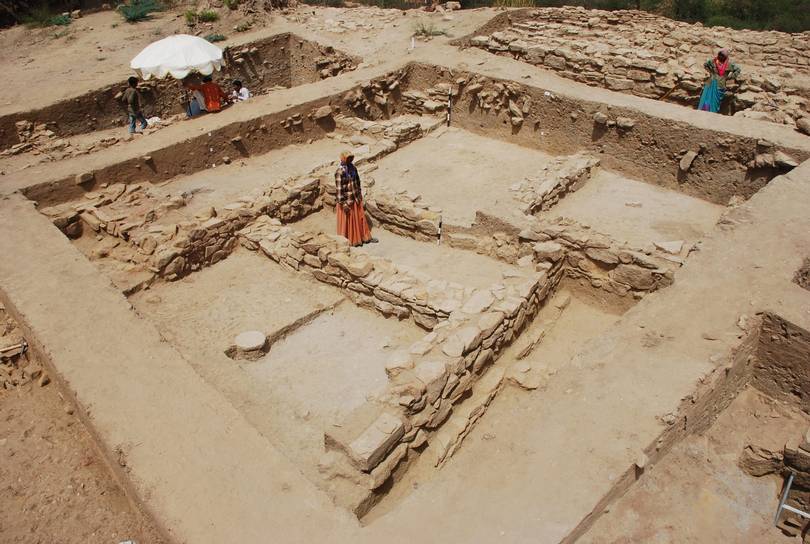
(Image Courtesy: Frontline-The Hindu)
“The site encloses the citadel in the south, warehouse in the southeast, factory area in the center, residential annexes in the north, and series of rock-cut kilns on the east.”, mentions the journal paper by Jitendra Nath and R.N.Kumaran. According to the Frontline Magazine report, the citadel complex was strategically located adjacent to the warehouse and the factory site so that the elite class might exercise full control over the manufacturing and trading activities.
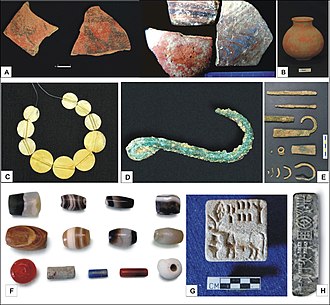
(Image Courtesy: Wikipedia)
The site has yielded a cornucopia of globular pots, sturdy storage jars, painted ware, perforated parts of broken jars, incense burners, dish-on-stand, goblets, beakers, basins, bowls, ladles, and so on. The magnificent artifacts that have been discovered here include Harappan seals, terracotta figurines, copper implements, a variety of beads, drill bits, stone weights of various denominations, shell objects, and a gold hoard. As per Jitendra Nath’s statement to Frontline Magazine, there are rectangular seals depicting the unicorn and the bison, and the Harappan characters; there are rectangular bar-type seals with the Harappan script alone and circular seals.
The Mahabharata Accounts:

(Image Courtesy: amazon.com)
Harivamsha/Harivamsha Purana is an appendix or supplement to the ancient Indian epic Mahabharata. It narrates the lineage and life story of Krishna (alias Hari), a deified personality in the Mahabharata. Harivamsha contains a good amount of details about Dvaraka/Dvaravati, a city built by the efforts of Lord Krishna during the Mahabharata days in order to provide a safe haven for the people of his kingdom. It was located in the western region of the Indian subcontinent, which is now known as the Indian state of Gujarat.
Krishna selected a spot adorned by marshes in the western coastal area of the subcontinent for establishing the Dvaraka city. Considering the population of his kingdom and its future growth, Krishna further retrieved 12 yojanas (an ancient unit of measurement) of submerged land from the sea so that the divine architect Vishvakarma could build an extensive city for the Yadavas. The Mausala Parva of Mahabharata declares that Dvaraka was later flooded by the ocean waters when Lord Krishna passed away; it mentions that “whatever portion of the ground was passed over, ocean immediately flooded over with his waters.” Probably, this statement means that only the portion of Dvaraka built on the land retrieved earlier by Krishna from the sea was inundated by the ocean after Krishna’s demise, and the remaining part of the vast city remained intact.
The Comparison:
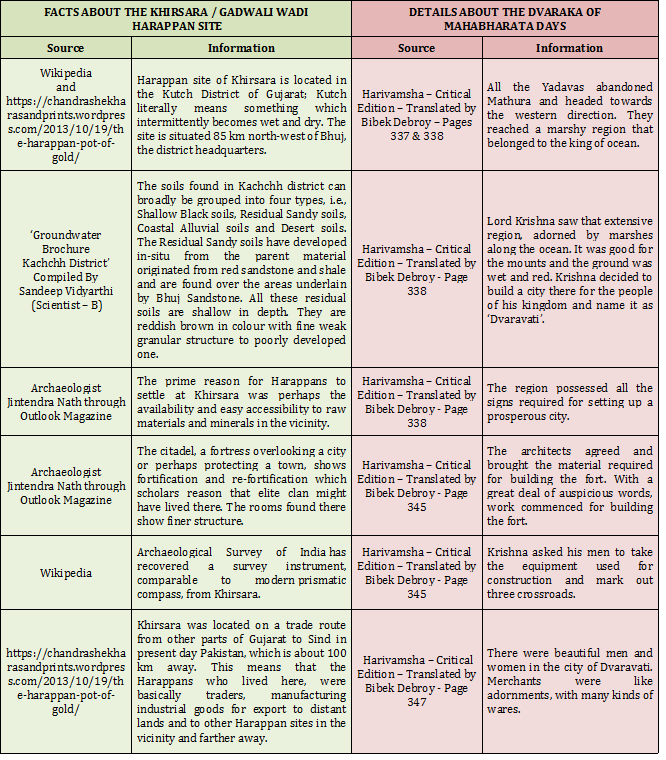
In my humble opinion, the details about Krishna’s Dvaraka found in the critical edition of Harivamsha, translated by Bibek Debroy, are relatable to certain facts about the Gadhwali Wadi Harappan site. Hence, I am presenting the comparable points side by side in the following tabular column:
The Conclusion:
According to my research, the date range of the Mahabharata period is circa 3300–2600 BCE (Early Harappan Period). The Harappan site of Khirsara/Gadhwali Wadi has been dated circa 2600–2200 BCE and hence, the Mature Harappan site of Khirsara may be considered a town/city founded by the people of Krishna’s clan during the post-Mahabharata days. However, there are chances that archaeologists might find some evidence in the future which points to an older date for the site; incidentally, such a thing did happen in the case of Dholavira. Perhaps, the location of the Harappan site of Khirsara was within the boundary of Krishna’s Dvaraka during the Mahabharata days.
Closing Message:
If you enjoyed reading this post, please check the next one; it is about the first book I have authored: ‘THE TRUE HARAPPANS: An Incredible Revelation’.
End-Note:
Thanks for reading this post; please leave your feedback in the comment box below.
Check the Home page for the latest posts from our blog.
Browse the Blog page to find all the posts.
Visit the About page for the introduction to the blog.
Learn about the Research, Titbits, and Bliss sections of this blog.
To know the terms and conditions of this blog, please read the Norms page.
Go to the Contact page to message me and/or to find me on social media.


Thank you for this, Gayatri Ma’am.
Very well argued, as usual.
LikeLiked by 1 person
Immense thanks for your feedback Sir. I am extremely happy about your interest in our blog 😊🙏🏻🙏🏻🙏🏻
LikeLike