About the Post:

In the ancient Indian epic Valmiki Ramayana, Pampa Sarovar is specified as a sacred lake near the Rishyamuka Mountain, where Rama and Lakshmana met the female ascetic Shabaree and two of the famous vanaras, Hanuman and Sugriva. However, intriguingly, the descriptions of Pampa Lake in the Valmiki Ramayana do not seem to align with the present-day Pampa Sarovar in Karnataka, South India. This discrepancy sparked my curiosity, leading to this article, which chronicles my quest to trace the true Pampa Sarovar glorified in the Valmiki Ramayana.
Sneak Peek:
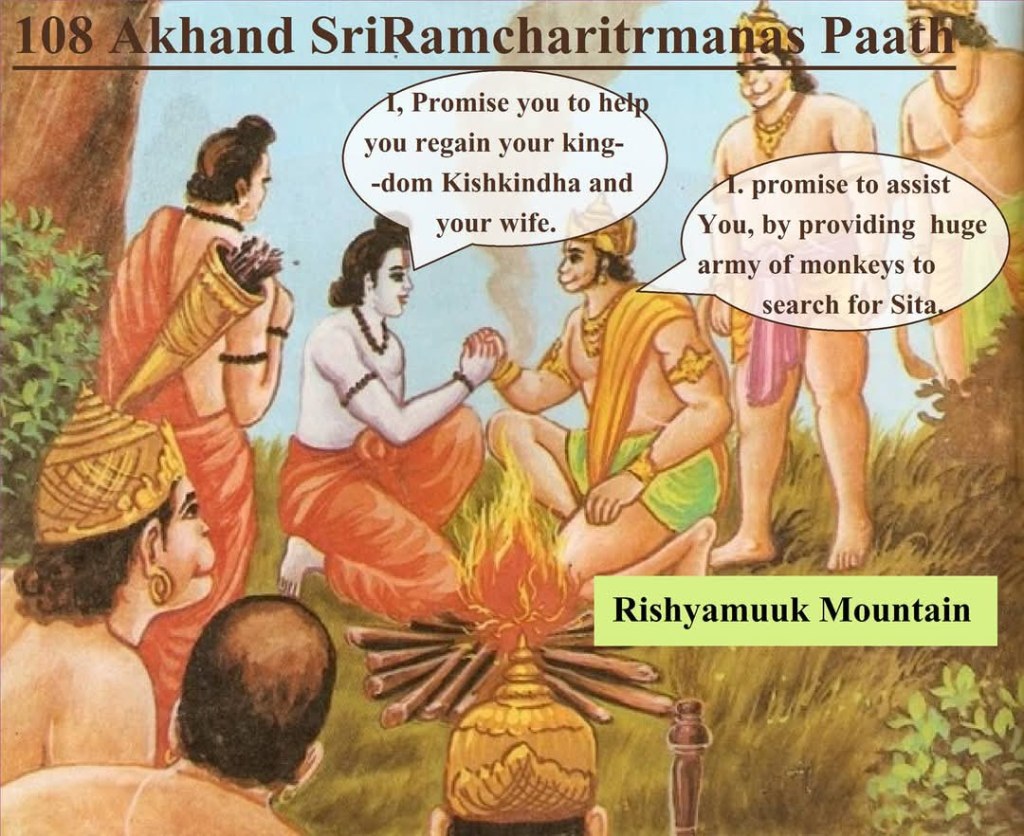
Lord Rama and his brother Lakshmana journeyed to the Pampa Lake near Rishyamuka Mountain to seek Sugriva’s alliance in locating Sita, who was abducted by Ravana. But what if their path did not lead to the present-day Pampa Sarovar in South India? What if I tell you their trail takes us to the African Great Lakes region? Read on to explore this astonishing plausibility………
Tracing the Proper Pampa Lake:
Ramayana Period:
According to certain ancient Indian Puranas, the Ramayana happened in the 24th Treta-Yuga of the ongoing Vaivasvata-Manvantara. If interpreted literally, this suggests that Lord Rama lived approximately 18 million years ago. Setting aside the question of human existence at that time, this period corresponds, in geological terms, to the Burdigalian Stage (from 20.43 ± 0.05 to 15.97 ± 0.05 million years ago) of the Early Miocene Epoch (from 23.03 ± 0.05 to 15.97 ± 0.05 million years ago).
Significant Clues:
The Valmiki Ramayana provides numerous details and vivid descriptions of Pampa Lake and Rishyamuka Mountain, particularly in the final chapters of the Aranya-Kanda and the opening chapters of the Kishkindha-Kanda.
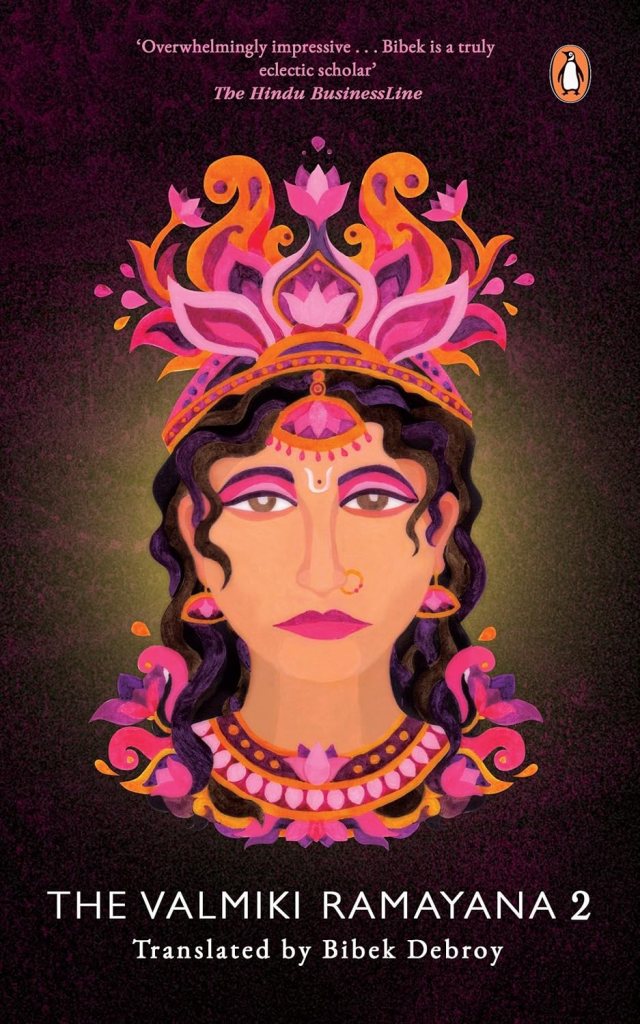
In his English translation of the Valmiki Ramayana (THE VALMIKI RAMAYANA – Volume 2, Penguin Books, Pages 151 & 155), Bibek Debroy mentions the ‘blue lotus’ among the flora of Pampa Sarovar. Interestingly, the Nymphaea nouchali var. caerulea, commonly known as the blue lotus or the blue Egyptian lotus, is native to Africa.
Desiraju Hanumanta Rao, in his translation of the Valmiki Ramayana (Book III: Aranya Kanda, Chapter 73, Verse no.: 38b–39a), describes “the exultant sapphire-blue Rurus with black stripes” among the fauna in the Pampa Sarovar region. He interprets ‘Ruru’ as “a species of deer, say gnus with black stripes”. Interestingly, according to Wikipedia, Connochaetes taurinus—also called the blue wildebeest/common wildebeest/white-bearded gnu/brindled gnu—is one of the two species of wildebeest inhabiting Eastern and Southern Africa.
Valmiki, the author of Ramayana, specifies ‘vakratunda‘ among the fauna of the Pampa Sarovar surroundings. Bibek Debroy and Desiraju Hanumanta Rao translate it as “dolphin” or “dolphin-like.” However, the term vakratunda is traditionally associated with Lord Ganesha, the elephant-faced deity in Hinduism. So, I interpret the vakratunda mentioned by Valmiki in this context as Gnathonemus petersii, commonly known as Peters’s Elephant-nose Fish, which is native to Africa.
In my view, the ancestors of these modern plant and animal species may have existed as early as the Early Miocene Epoch. While the available scientific evidence partially supports this theory, conclusive proof might emerge in future.
The Real Rishyamuka Mountain:
Though commonly spelled as Rishyamuka in English, the correct transliteration with diacritics is Ṛṣyamūka. It is likely a compound Sanskrit word, split as Ṛṣya and mūka. The term Ṛṣya is generally understood to mean “the male of a species of deer or antelope.” However, Gautama Vajracharya, in his journal paper ‘Unicorns in Ancient India and Vedic Ritual‘, argues that Ṛṣya actually refers to the male of an animal species with a single horn (i.e., a unicorn). He further explains that the female of this species was called Rohit, and like female deer and antelope, it was likely devoid of a horn.
The Sanskrit word mūka has multiple meanings, the most common being “mute” or “silent.” Curious about this, I asked ChatGPT whether unicorns were silent creatures, and here is the response I received:
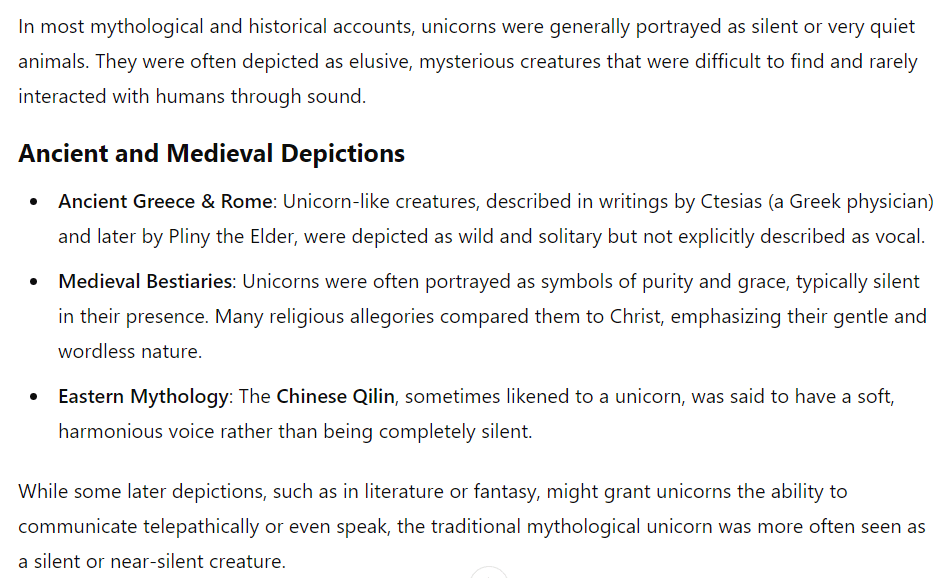
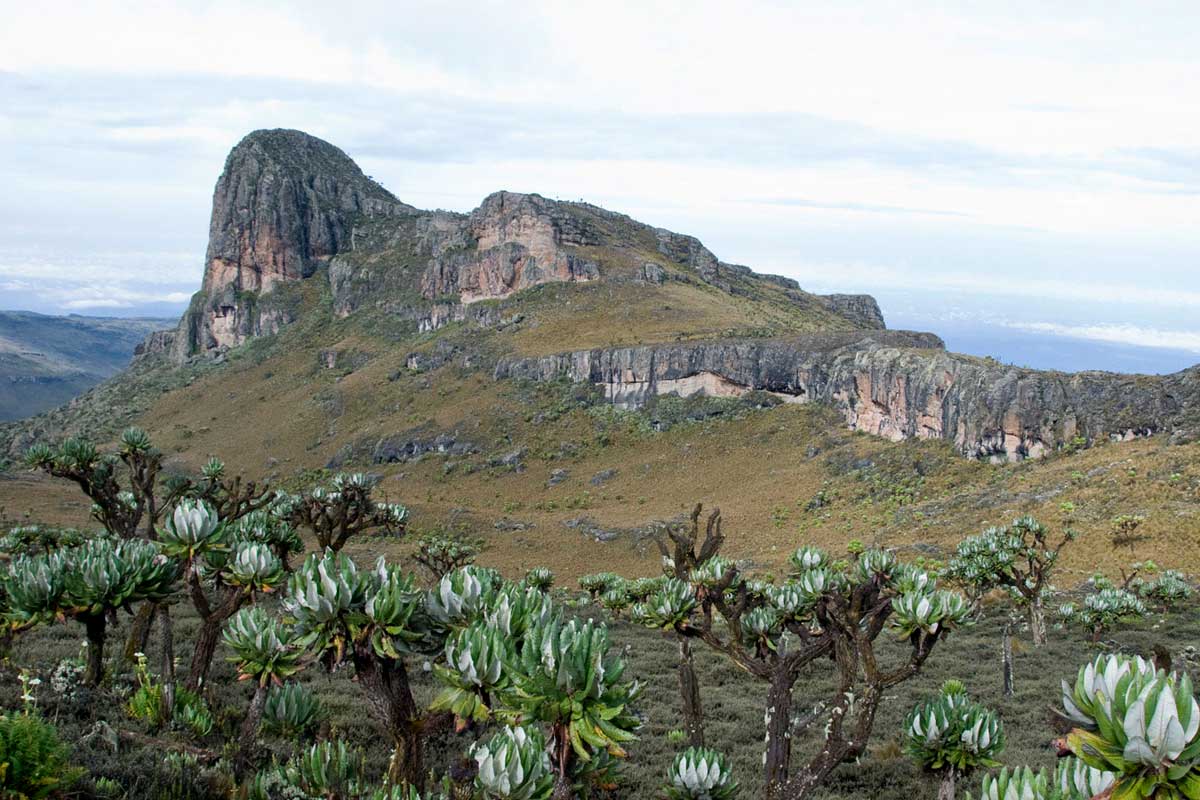
Therefore, I strongly felt that Ṛishyamuka Mountain had some connection to unicorns. To explore this idea further, I searched the internet to see if Africa had ever yielded fossils of unicorns—perhaps similar to the Siberian Unicorn—but the answer was no. So, I shifted my focus to finding an ancient African mountain that might resemble a unicorn. To my surprise, I discovered that Mount Elgon, from a certain angle, resembles the horn and the neck of a unicorn, often depicted as a horse-like creature with a single horn on its forehead. Besides, scientific estimates suggest that the mountain is at least 24 million years old. These factors tempted me to identify Mount Elgon as the real Rishyamuka Mountain of the Ramayana Period.
Furthermore, during my efforts to verify this inference, I came across the following statements in Desiraju Hanumanta Rao’s English translation of Valmiki Ramayana (Book III: Aranya Kanda, Chapters 72–73):
“That self-respectful valiant Sugreeva is living on the Mt. Rishyamuka, a best mountain available in the lambent fringes of Pampa Lake, along with four other vanara-s.” [3-72-12]
“Oh, best one among men Rama, at Pampa you will see best shaped Vanara-s who have their bunk bed in mountain caves, and who will be coming nearby the lake, greedy as they are for water, and those forest movers will be moving about in evening time of the day, bellowing like bulls… oh, Rama, Lakshmana will show them to you… ” [3-73-18b, 19, 20a]
And intrigued by the detail “bunk bed in mountain caves”, I searched the internet to see if any African mountain exhibited similar features. To my delight, ChatGPT confirmed that such formations exist in Mount Elgon:

The Proper Pampa Lake:
Mount Elgon, which I identify as the real Rishyamuka Mountain of the Ramayana Period, is situated in the African Great Lakes region. Interestingly, this vast region has yielded several Early Miocene fossil sites.
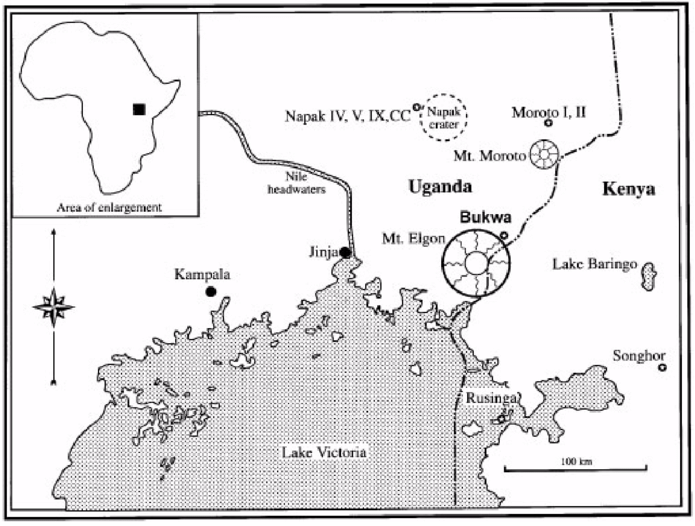
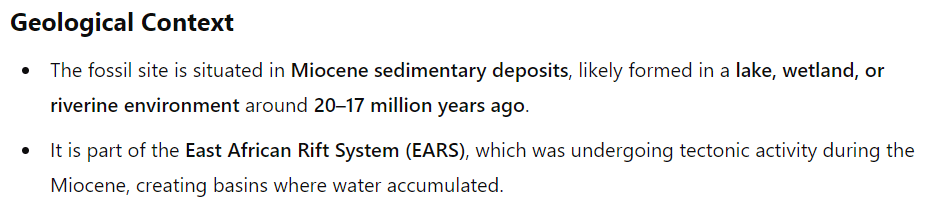
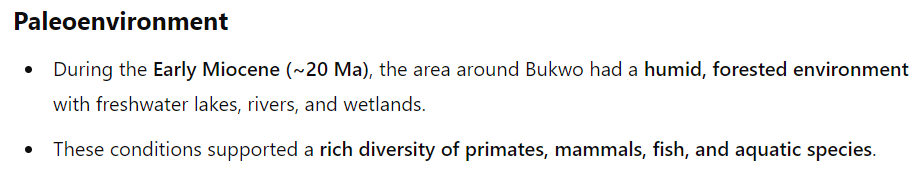
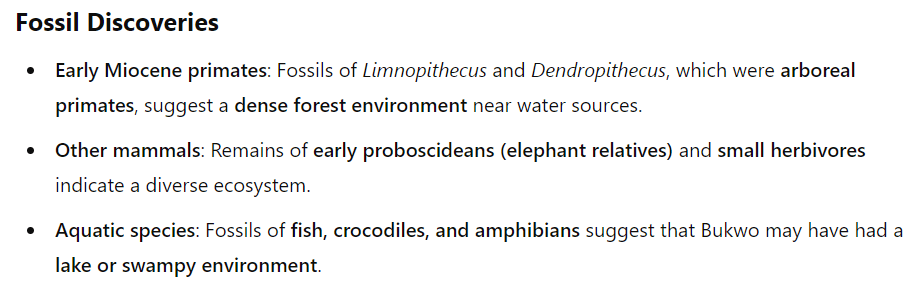
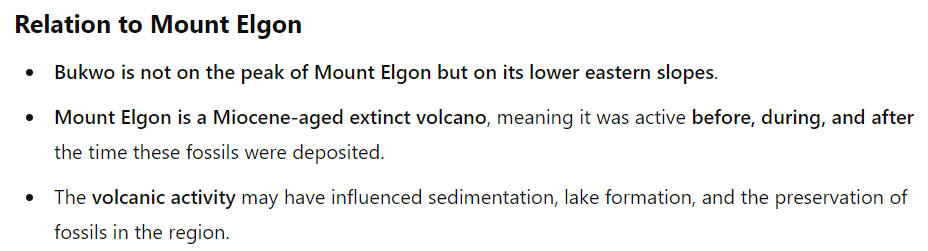
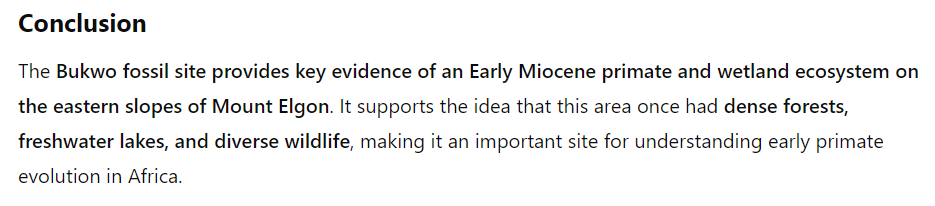
Bibek Debroy’s English translation of the Valmiki Ramayana contains statements that seemingly place Rishyamuka Mountain on the western bank of Pampa Sarovar. So, I turned to the internet—particularly ChatGPT—to find out whether a freshwater lake existed to the east of Mount Elgon during the Early Miocene Epoch. From the search results, I inferred the Bukwa/Bukwo fossil site, on the eastern slopes of Mount Elgon, as the plausible location of the Pampa Sarovar described in the Valmiki Ramayana:

Closing Message:
Thus, I identify Mount Elgon on the border of Uganda and Kenya as the real Rishyamuka Mountain and the Bukwa/Bukwo Early Miocene fossil site near the Kenya-Uganda border as the plausible location of the proper Pampa Sarovar. However, I encourage readers to explore the relevant chapters of Valmiki Ramayana to assess how well my interpretations align with the descriptions in the epic.
End-Note:
Thanks for reading this post; please leave your feedback in the comment box below.
Check the Home page for the latest posts from our blog.
Browse the Blog page to find all the posts.
Visit the About page for an introduction to the blog.
Learn about the Research, Titbits, and Bliss sections of this blog.
To know the terms and conditions of this blog, please read the Norms page.
Click Contact to send me a message or to find me on social media.
 DetectHistory.in
Wonderful informations Gayathri👏👏👏 Keep it up. Like to read more & more. best wishes💐💐
LikeLike
Thanks a lot Ms Aarthi for your continuing interest and support. Such encouraging comments, like yours, keeps me going.
LikeLike