About the Post:

So far, I have published two posts—ARCHAEOLOGICAL REMAINS OF ĀLAVĀI-MADHIL? and THE ‘POTTRĀMARAI’ (GOLDEN LOTUS) OF MADURAI—to highlight specific evidence that points to the Americas as the location of the Puranic Pandyan city, Madurai, aka Tiru-Ālavāi. This article presents another detail from the TIRUVILAYĀDAL PURĀNAM that strengthens my interpretation.
Sneak Peek:
A distinctive natural phenomenon described in the ancient Tamil epic TIRUVILAYĀDAL PURĀNAM provides credible clues about the location of the ancient Madurai it glorifies. Read on to uncover this intriguing hint, which reinforces the pertinent inferences I have previously published on this blog………
The Clue:
The TIRUVILAYĀDAL PURĀNAM, supplemented with V. Jothi (M.A.)’s commentary and published by Varthamanan Pathippagam, explains a significant atmospheric phenomenon in the ancient Pandyan land, as described by the author Paranjothi Munivar. The relevant verses (Nos. 33 & 34), belonging to the Madurai-kāndam, are given with their interpretations on pages 228–229 of Volume 1 (second edition: 1998).
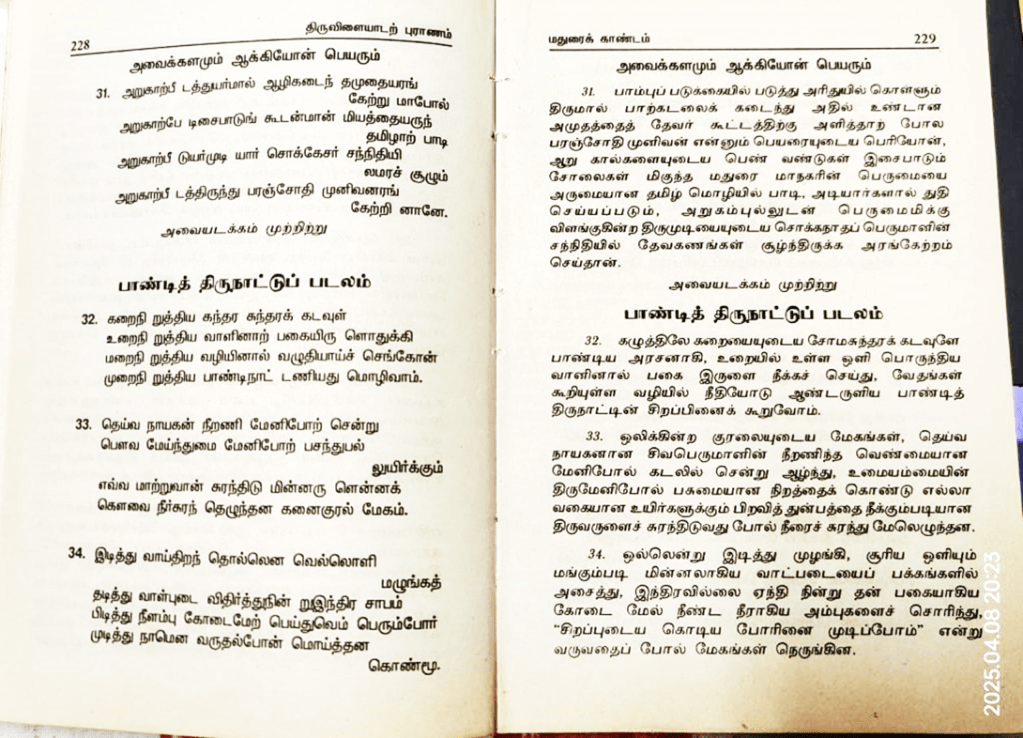
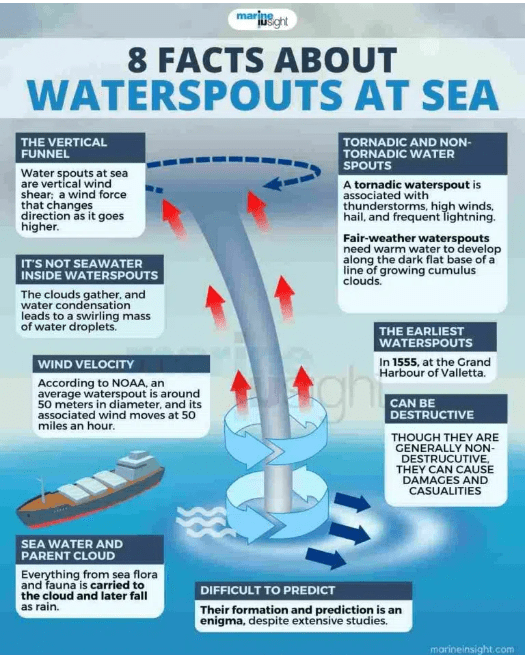
Paranjothi Munivar says that the white clouds over the Pandyan land take on a greenish hue after consuming the sea waters and then rise with a rumbling sound, emanating roaring waters. He further states that these clouds—advancing with thunder, lightning, rainbows, and torrential rains—appear as if they are marching forth to wage war against their enemy, the summer.
Upon reading these descriptions closely and repeatedly, I understood that Paranjothi Munivar was, in fact, describing a tornadic waterspout. So, I compare these particulars with the characteristic features of a tornadic waterspout presented below, as learnt from ChatGPT and Google Chrome.
The Waterspouts:
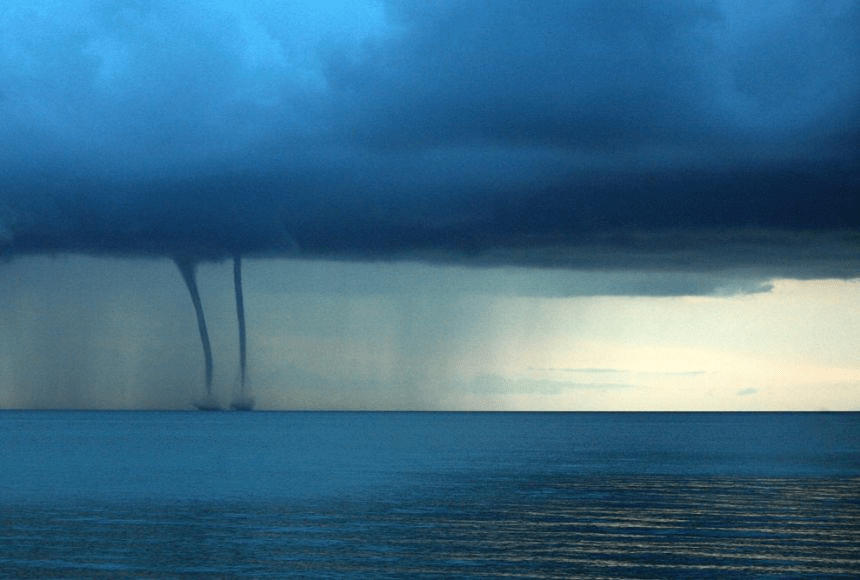
Waterspouts – Definition:
A waterspout is a rotating column of air and mist that forms over a body of water, typically connecting a cloud base to the water surface. It resembles a tornado over water and often appears as a funnel-shaped cloud.
Waterspouts – Characteristics:
1) Usually short-lived (minutes to tens of minutes)
2) Occur most often in tropical and subtropical waters
3) May produce spray rings, mist funnels, and even hail or green clouds if tornadic
4) Can be dangerous to boats, aircraft, and coastal areas
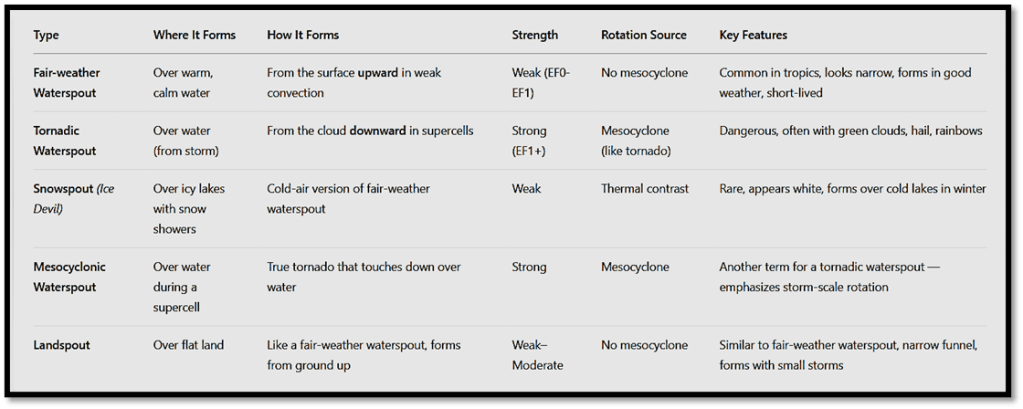
Waterspouts – Types:
Waterspouts – Relevant To This Article:
Tornadic Waterspout
• A true tornado that forms over water or moves from land to water
• Develops from the cloud downward
• Forms within severe thunderstorms (often supercells)
• Can be very dangerous, with strong winds and heavy rain
Mesocyclonic Waterspout
• A subtype of tornadic waterspout
• Specifically linked to a mesocyclone (rotating updraft in a supercell storm)
• Typically the most violent waterspouts
Waterspout- Appropriate To This Article:
Mesocyclones and tornadic waterspouts are not the same, although they are related. A mesocyclone is a rotating column of air within a thunderstorm, which can be a precursor to a tornado. A tornadic waterspout, on the other hand, is a tornado that occurs over water, and it can be formed from a mesocyclone or move from land to water. While both are related to severe thunderstorms, the key difference is their location. Mesocyclones are internal features of thunderstorms, while tornadic waterspouts are the visible tornado vortex over water. So, the one appropriate to this article is the Tornadic Waterspout.
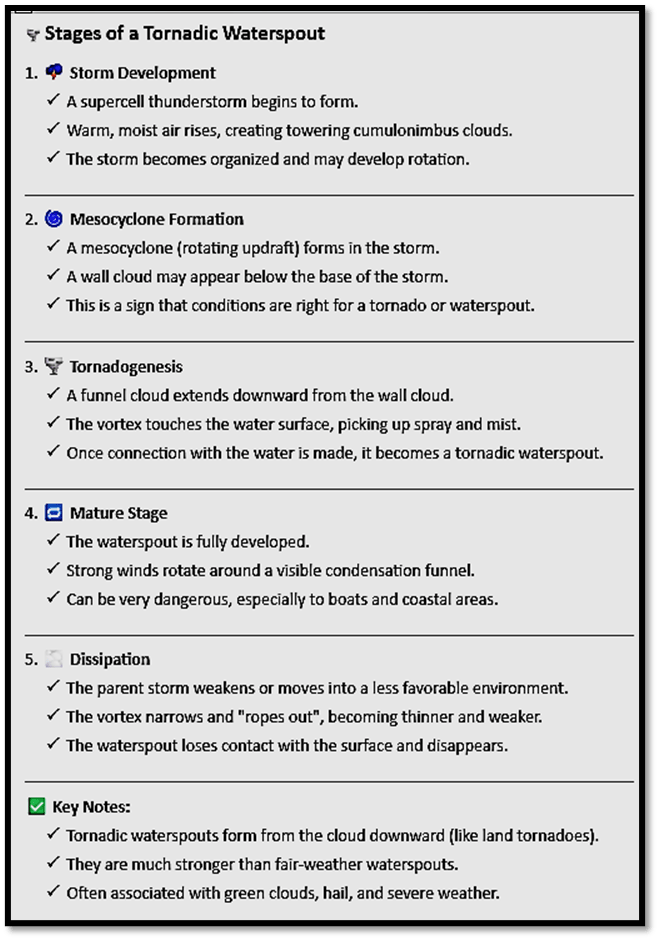
Tornadic Waterspout – Stages:
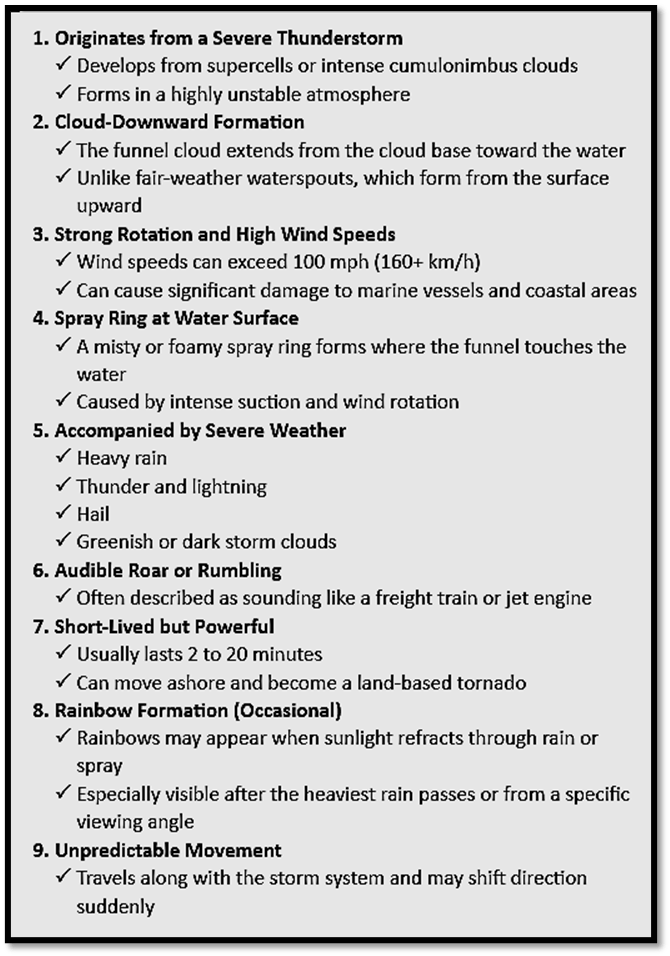
Tornadic Waterspout – Features:
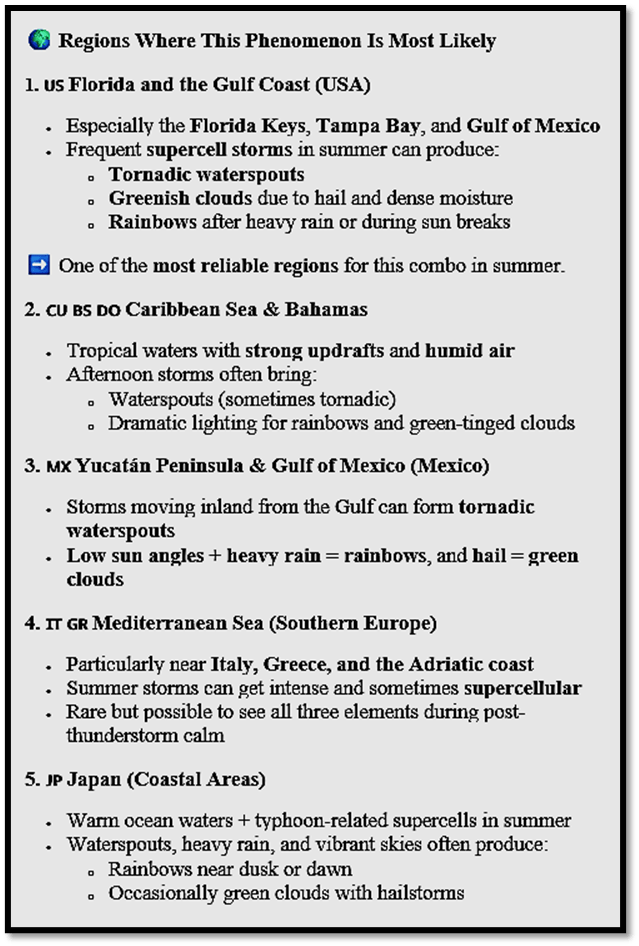
Tornadic Waterspout – Vulnerable Regions:
When I asked ChatGPT about the parts of the world that witness the combination of 🌪️ tornadic waterspouts, 🌈 rainbows, and 🟩 greenish clouds during summer, it stated, “While this trio is uncommon, there are certain parts of the world where all three can align, especially during severe thunderstorms over water in the warm season.”
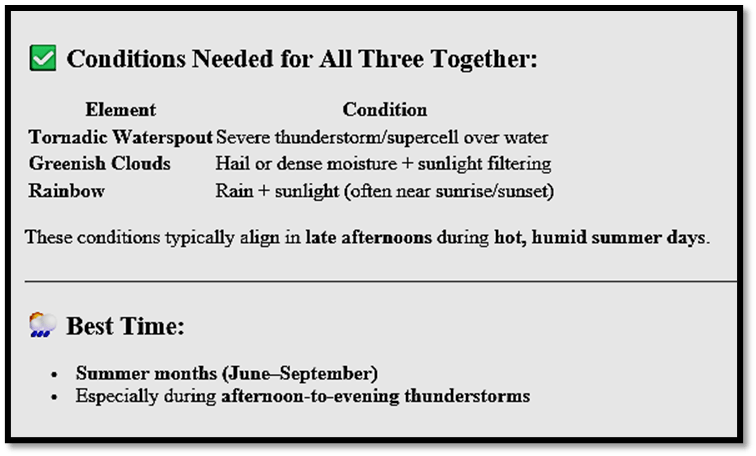
Inferences:
One can observe how well Paranjothi Munivar’s descriptions, discussed in this article, agree with the facts about tornadic waterspouts. Besides, according to ChatGPT and Google Chrome, most regions vulnerable to tornadic waterspouts—featuring greenish clouds and rainbows during summer—are in the Americas. Thus, all the credible clues embedded in the TIRUVILAYĀDAL PURĀNAM seem to point to the Americas as the landmass that housed the ancient Madurai it celebrates.
Closing Message:

Hitherto, I have presented three unique descriptions/details from the TIRUVILAYĀDAL PURĀNAM that point to the Americas as the plausible location of the original Kadamba Vanam that came to be known as Madurai, aka Tiru-Ālavāi. There are probably at least a few more such clues in the epic, which I might discuss in future posts.
KALI-THOGAI, SILAPPATHIKARAM, and a few other ancient Tamil literary works mention the submergence of Pandyan lands and the resultant migration of survivors to other entities. Perhaps some of them refer to the deluge mentioned in the TIRUVILAYĀDAL PURĀNAM. Furthermore, naming a new homeland in memory of the native land was likely a common tradition in ancient times.
Therefore, based on all the relevant interpretations published on this blog, I infer that Madurai of the distant past was most likely located in the Americas.
End-Note:
Thanks for reading this post; please leave your feedback in the comment box below.
Check the Home page for the latest posts from our blog.
Browse the Blog page to find all the posts.
Visit the About page for an introduction to the blog.
Learn about the Research, Titbits, and Bliss sections of this blog.
To know the terms and conditions of this blog, please read the Norms page.
Click Contact to send me a message or to find me on social media.
 DetectHistory.in