About the Post:
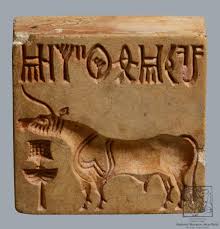
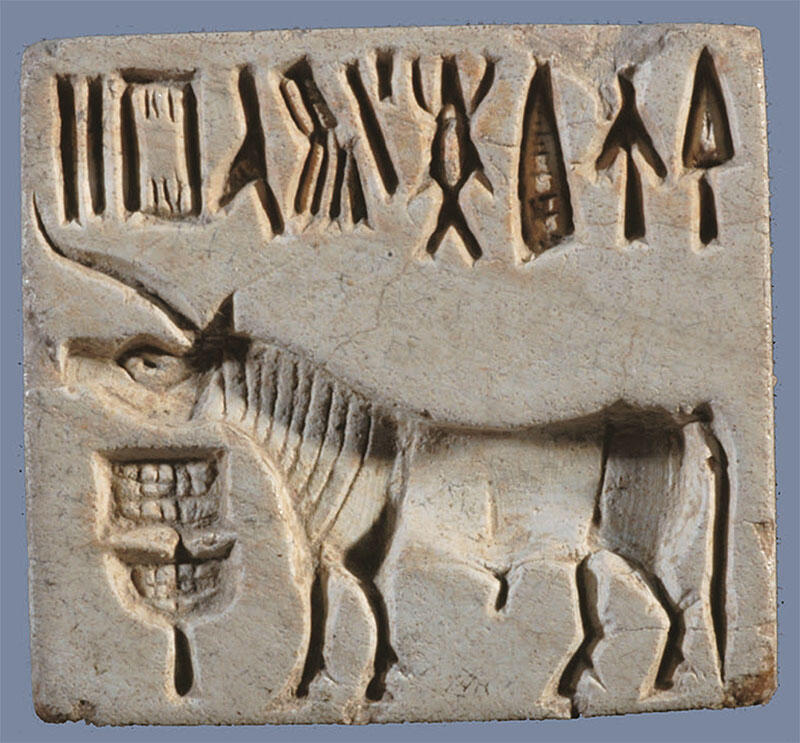
The so-called unicorn seals and sealings, depicting a peculiar one-horned creature alongside still-undeciphered pictographic characters, rank among the most fascinating artefacts of the Bronze Age Indus Civilisation, also known as the Harappan Civilisation. Excavations at various Harappan sites have likewise unearthed unicorn figurines, which, however, appear stylistically distinct from the creature represented on the unicorn seals and sealings. Yet the true identity and significance of the Harappan Unicorn have remained an enduring enigma since the discovery of the first unicorn seal—notably also the first Harappan seal—in the late nineteenth century.
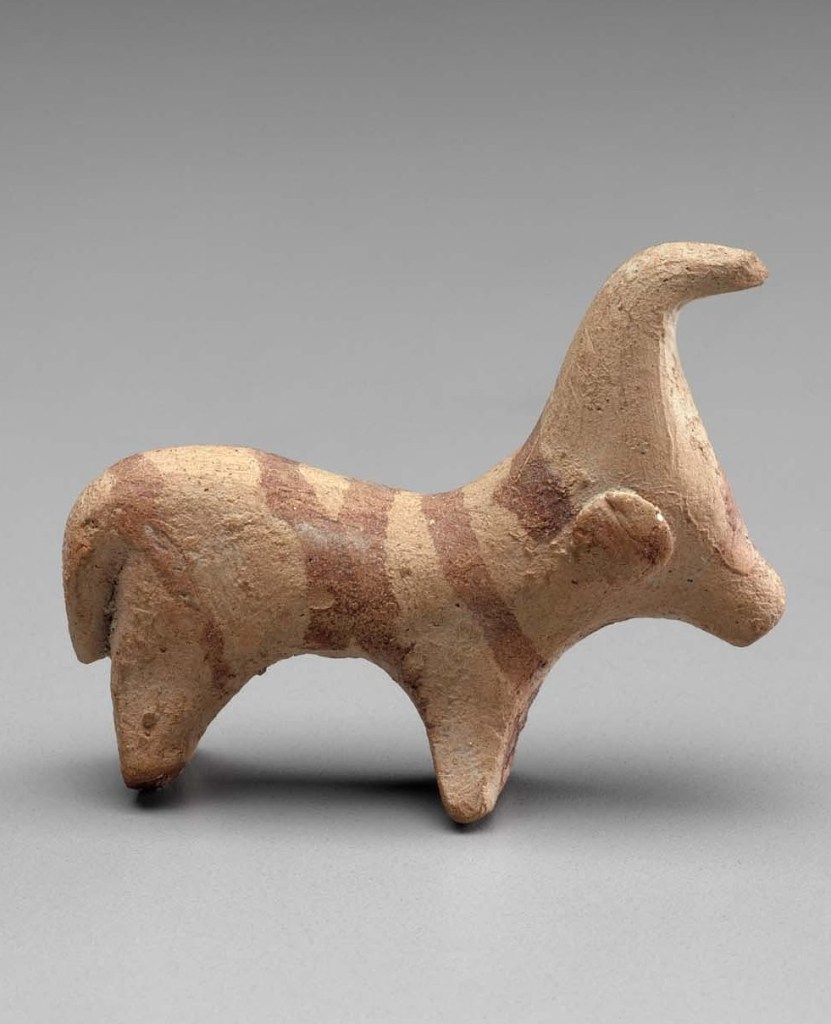
Having previously explored the connection between the Harappan Civilisation and the Mahābhārata in a series of articles on this blog, and also in my maiden book, ‘The True Harappans‘, this post brings together clues from traditional sources that may help unravel the mystery of the Harappan Unicorn.
Sneak Peek:
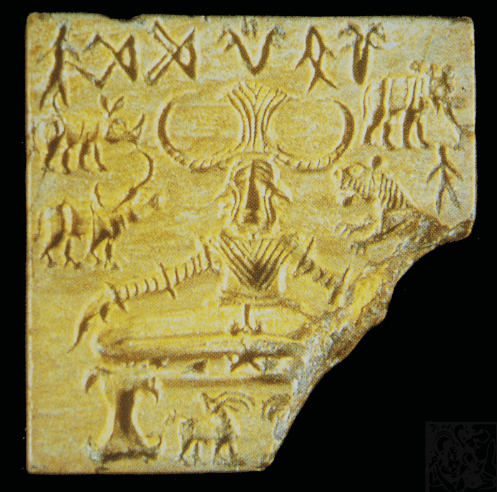
Indus/Harappan Seal No. 420 has long been known as the “Pashupati Seal”, following Sir John Marshall’s interpretation of its central meditative figure as Pashupati—an epithet of Lord Shiva meaning “Lord of the animals”. In contrast, the enigmatic unicorn depicted in Harappan art may, in fact, represent the true Pashupati. Read on to explore this intriguing interpretation…
Unicorns: Real or Myth?
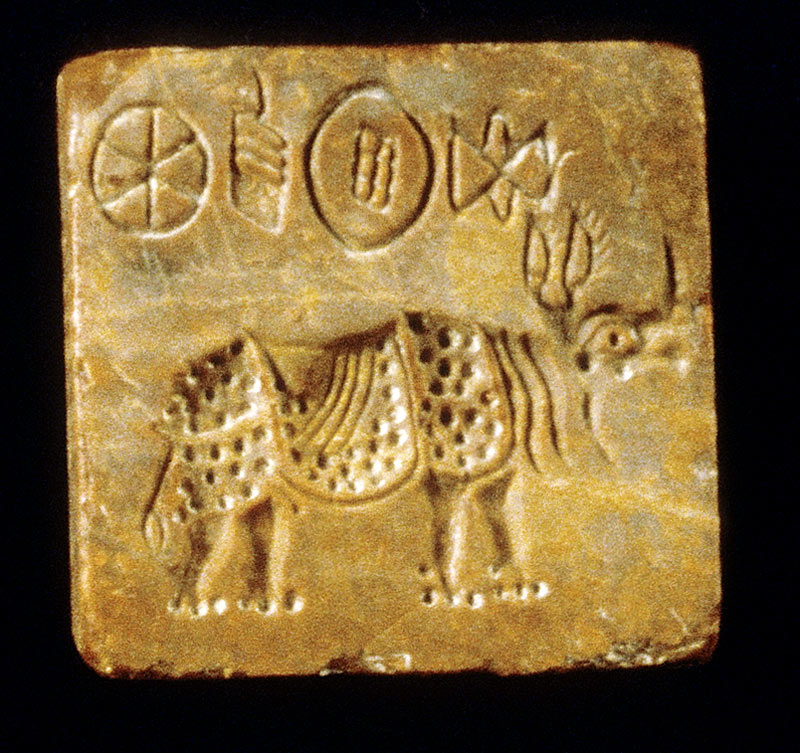
Various ancient cultures, through their material artefacts and literary traditions, have portrayed diverse kinds of unicorns—distinctive creatures characterised by a single horn. Yet written accounts of unicorns were often dismissed as embellished descriptions of the Indian rhinoceros, a real animal bearing a solitary horn upon its snout. This interpretation likely arose from the use of a common term in several languages to denote both the rhinoceros and the unicorn, a tendency further reinforced by the widespread assumption that no genuine unicorn had ever existed. Consequently, in the modern era, unicorns came to be regarded largely as mythical beings—at least until the discovery of fossil remains of the so-called Siberian Unicorn (Elasmotherium sibericum), a massive prehistoric rhinoceros-like animal of the Pleistocene Epoch, purportedly distinguished by a single enormous horn on its forehead. However, the clear distinction between the rhinoceros and the unicorn in Harappan representations strongly suggests that the people of ancient times recognised them as separate creatures.
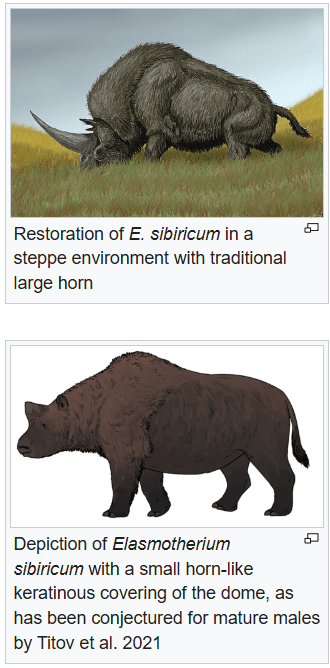
The Siberian Unicorn, which survived until approximately 39,000 years ago in the open grasslands and arid steppe regions of northern Eurasia, is now widely regarded as the probable basis behind ancient unicorn traditions. Artistic reconstructions of the Siberian Unicorn are largely derived from its fossil remains. The features represented in these reconstructions appear to align closely with Claudius Aelianus’s ancient Greek descriptions of a one-horned beast of India—rather than northern Eurasia—called Cartazonus, recorded in ‘De Natura Animalium’ (Book 16, Chapter 20), thereby lending at least some credibility to such classical European accounts. However, the physical form of the unicorn depicted on Harappan seals and sealings hardly bears any resemblance to that of the palaeontologically reconstructed Siberian Unicorn. It is therefore possible that the Harappan Unicorn represents a distinct and as yet scientifically unrecognised variety of one-horned creature.
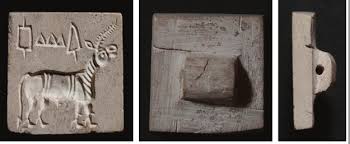
Many may be familiar with the excerpts preserved by the Byzantine scholar Photius from ‘Indica’ (Chapter 45), a lost work of the Greek physician Ctesias, which describes a one-horned beast of India—identified as the “Wild Ass”—whose body combined features of several different animals. The striking correspondence between these accounts and the Harappan Unicorn suggests that such creatures may plausibly have existed in the distant past, while also indicating that Asian literary traditions may preserve further references to them that remain largely unexplored. This article seeks to pursue these clues in an attempt to arrive at a plausible interpretation of the Harappan Unicorn.
Unicorn in Sanskrit Literature:
The Sanskrit word ṛśya (ṛṣya in classical Sanskrit) is generally understood to denote “a male deer or antelope.” However, Gautama Vajracharya, in his journal article ‘Unicorns in Ancient India and Vedic Ritual‘, argues that the term instead referred to a male unicorn. He further proposes that the female of this species, known as rohit, was most likely hornless, much like the females of many deer or antelope species.
Vajracharya further observes that Sage Rishyashringa (Ṛśyaśṛṅga), an important character in the Rāmāyana, is referred to in Buddhist texts as Ekaśṛṅga (“one who has a single horn”) or Isisiṅga (the Pali form of Ṛśyaśṛṅga). He additionally interprets a passage in the Mahabharata (Book 3, Section CX) as suggesting that Sage Rishyashringa was born with the single horn of a ṛśya (male unicorn), rather than the two horns of a male deer or antelope, as is commonly assumed. On this basis, Vajracharya infers that the sage’s mother was not a female deer, as widely believed, but a rohit (female unicorn), who conceived him after drinking river water mingled with hermit Vibhāṇḍaka’s semen, ejaculated upon beholding a celestial nymph of extraordinary beauty.

Citing what he identifies as the earliest textual reference to ṛśya in the RIGVEDA (8.4.10)—“O Indra, visit us like the thirsty ṛśya which comes to drink water from avapāna”—Vajracharya states that the creature is portrayed as a forest animal that occasionally approached Vedic settlements to drink from the avapāna, a small reservoir intended for supplying water to cattle. Significantly, the comparison of Lord Indra with ṛśya clearly indicates that the creature occupied a position of considerable prestige among the animals of the age in which it was believed to have existed.
Unicorn in Tamil Literature:

The KAMABA RĀMĀYANAM, regarded as one of the great masterpieces of Tamil literature, refers to Sage Rishyashringa (Ṛśyaśṛṅga) as iralai-nal-sringa-mā-iraivan (Tiru Avatāra Padalam, Stanza 95). The same work also describes the Rishyamuka Mountain (Ṛśyamūka parvata) as iralaiyin kundram (Kavandhan Padalam, Stanza 54). Notably, these observations lend support to my interpretation of the Rishyamuka Mountain presented in ‘ON THE TRAIL OF PAMPA SAROVAR‘, an earlier article published on this blog.
Although iralai (இரலை) in modern usage denotes an antelope—more specifically, a male blackbuck—certain descriptions found in the Sangam Literature suggest that the term may originally have referred to the male of an animal species which, though classified as an antelope, was in fact a unicorn. Incidentally, the female of this species appears to have been referred to as piṇai or tuṇai, terms that more broadly denote a female deer or antelope.
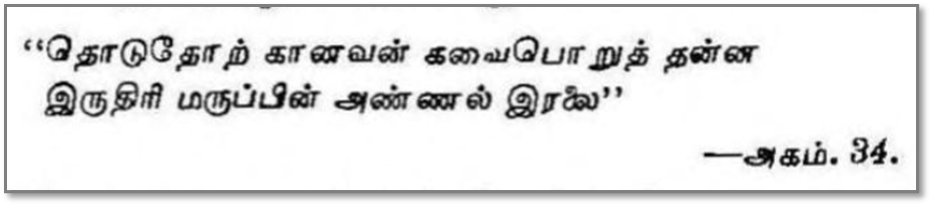
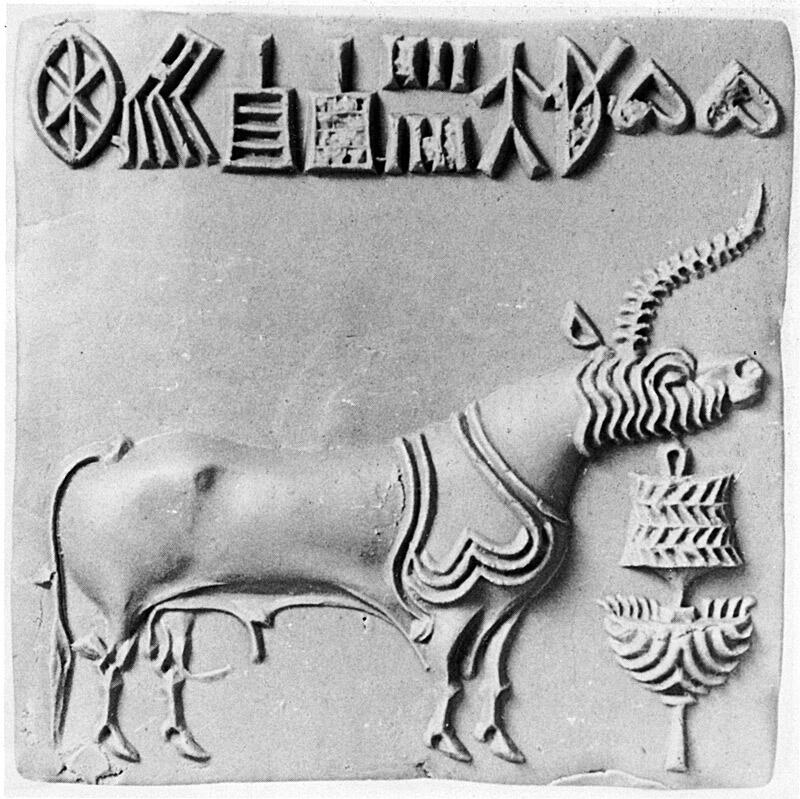
The word tirimaruppu (திரிமருப்பு), frequently employed in the Sangam Literature to describe the iralai, as in the verses cited above, is interpreted by modern scholars as referring to the spiral horn of an antelope. Significantly, however, the horn of the Harappan Unicorn is likewise renowned for its spiral form, comparable to that of certain antelope species, thereby suggesting that iralai may indeed have denoted a unicorn in ancient Tamil literary tradition.

Among the several references preserved in Sangam Literature, the verses from the Akanāṉūṟu cited above describe the horn of iralai as resembling a traditional catapult used by a forest-dweller or hunter, such as the one illustrated in Image No. 11. I am deeply grateful to the venerable epigraphist S. Ramachandran for explaining the meaning of these verses. In my view, this comparison strongly suggests that the iralai possessed a bifurcated horn—that is, a single horn bearing a projecting tine—perhaps comparable to the form depicted in Image No. 8, which portrays a statuette of a qilin, the Chinese Unicorn, with its rider.

At the same time, the term iralai also denotes a curved wind instrument originally fashioned from animal horns and later from metal. Among such musical instruments—commonly known in Tamil as kombu (கொம்பு), literally meaning “animal horn”—iralai may either have referred to a particular variety or have functioned more generally as a synonym for kombu itself. This association suggests that the term iralai may also have denoted a unicorn variant bearing a curved horn without projecting tines. It is equally possible that certain varieties of iralai possessed a straight horn devoid of both curves and tines, especially since Sangam Literature contains expressions such as nerikōṭṭu-iralai (நெறிகோட்டிரலை), meaning “straight-horned iralai”.
The term aṇṇal (அண்ணல்) in the cited verses suggests that the iralai was regarded as a noble or highly revered male beast. Moreover, the modern association of the iralai with antelope—just as in the case of its Sanskrit equivalent ṛśya—indicates that the iralai was more broadly understood as a kind of deer during the period in which such creatures were believed to have existed. Interestingly, Nepālā Māhātmya likewise extols a single-horned male deer as “Lord of the animals”.
Pashupati—The Divine Unicorn:
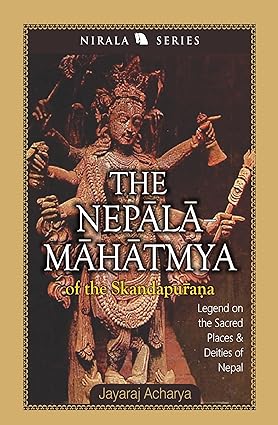
Jayaraj Acharya, in his English transliteration and translation of the NEPĀLĀ MĀHĀTMYA (Chapter 1) of the Skanda Purāna, states that Lord Shiva once assumed the form of a plump three-eyed deer (mṛgarūpadharam) bearing a single horn (ekaśṛṅgam) and his consort Parvati transformed herself into a doe (mṛgīrūpadharam) to revel in the beauty of Śleṣmāntakavanam—an ancient forest region nestled in the lap of the Himalayas that later became the sacred land of Nepal. Acharya further notes that Lord Shiva declared that this animal manifestation (paśurūpeṇa) of his would be known as Pashupati, “Lord of the animals”, and that of his consort would be called Vatsalā.
In fact, the Sanskrit terms mṛga and mṛgī denote not only the male and female deer or antelope, but also, in a broader sense, male and female animals in general. Yet Jayaraj Acharya interprets Pashupati—the one-horned mṛga—as an exalted male deer. Likewise, as noted earlier, the Sanskrit ṛśya, corresponding to the highly revered Tamil iralai and inferred by Gautama Vajracharya to denote a male unicorn, has long been identified as a male deer or antelope. Thus, Lord Shiva’s manifestation as Pashupati, apart from his iconic third eye, may therefore plausibly be understood as representing an apparently extinct species of wild beast—known as ṛśya in Sanskrit and iralai in Tamil—which, though traditionally regarded as a kind of deer or antelope, seems to have constituted a distinct form of unicorn belonging to a lineage separate from the genus Elasmotherium, including the Siberian Unicorn (Elasmotherium sibiricum). Correspondingly, the mṛgī, Vatsalā, may be interpreted as a presumably hornless female unicorn, identified as rohit in Sanskrit and piṇai or tuṇai in Tamil.
The Harappan Unicorn:
Qilin, a legendary hoofed creature of ancient Chinese tradition, appears to represent a particular variety within the broader family of one-horned beings. It occupies the foremost place among the Four Divine Beasts—the qilin, phoenix, tortoise, and dragon. According to certain sources, the term qilin comprises qi, denoting the male, and lin, denoting the female.
BaiduWiki portrays the qilin as a benevolent creature with the body of a milu deer (elaphure), the tail of a dragon, and a single horn, traditionally believed to have been born from the union of a dragon and an ox. Remarkably, one of the sources cited by Wikipedia describes qi as a humane beast possessing the body of an elaphure (milu deer), the tail of an ox, and a single horn, while identifying lin, the female counterpart of qi, as a large female deer. Taken together, these descriptions bear a striking resemblance to the unicorn depicted on Harappan seals. Moreover, the association of the qilin with a deer invites comparison with Pashupati, the “Lord of the animals” described in the Nepālā Māhātmya, thereby also linking the qilin to the Tamil iralai, corresponding in turn to the Sanskrit ṛśya.
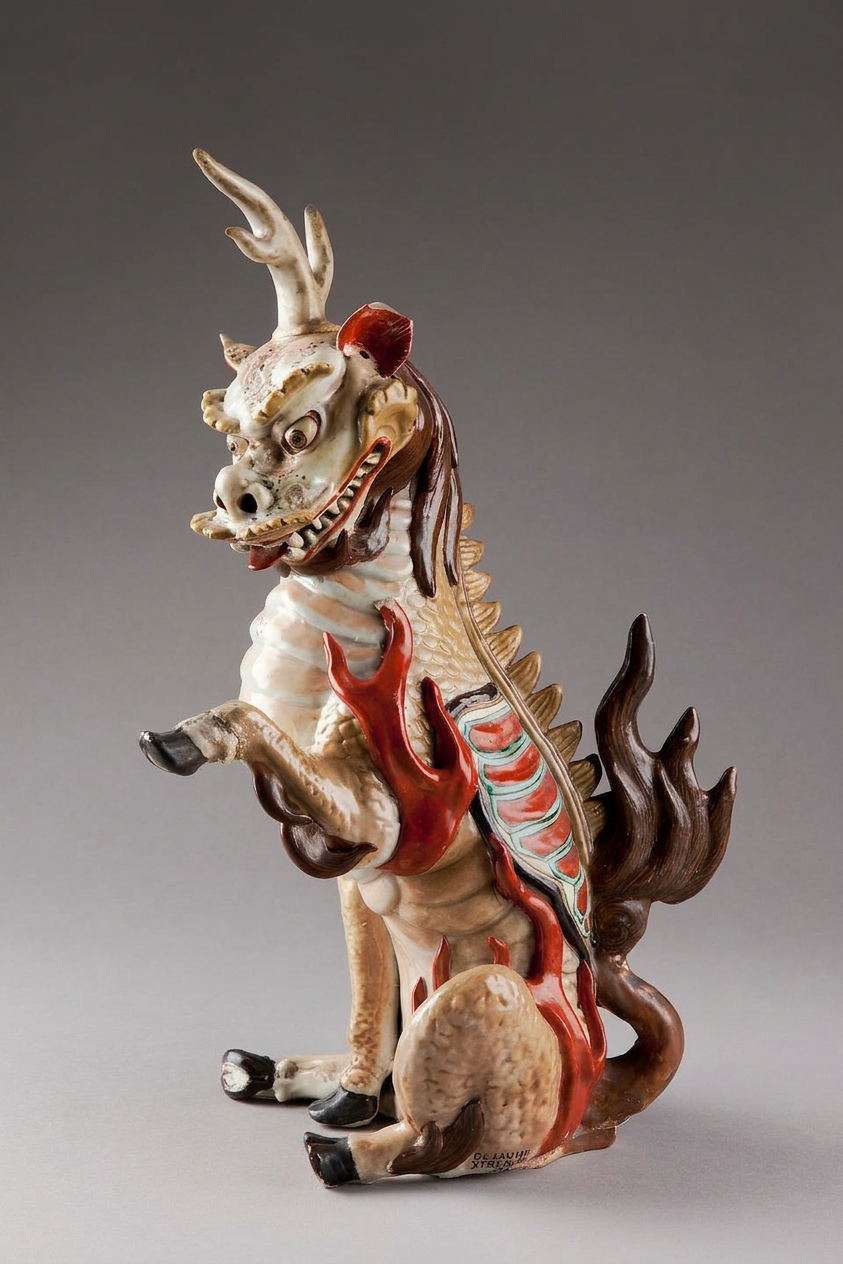
Notably, qilin has been represented in a remarkable variety of forms throughout Chinese art. Nevertheless, the most consistent features across these depictions remain a solitary horn and hoofed limbs. In certain representations, the horn appears bifurcated, as in Image No. 8, which portrays a horse-like qilin; in others, it assumes an antler-like form with multiple tines, as in Image No. 15 depicting a dragon-like qilin; while elsewhere it is rendered as a single straight horn, as in Image No. 16, which appears to represent a peculiar, perhaps boar-like qilin. In some depictions, however, the qilin appears with two horns, perhaps because a single bifurcated horn was perceived as two separate horns.
By contrast, the Harappan Unicorn is consistently portrayed in a form that closely matches traditional descriptions of the qilin. Its solitary horn, characteristically marked by a roughly S-shaped curve and the complete absence of tines, bears a notable resemblance to a specific variety of the kombu, a traditional wind instrument associated with the venerated iralai. The creature depicted on the unicorn seals and sealings may therefore plausibly have been intended to represent the esteemed one-horned mṛga Pashupati. Although it cannot be determined with certainty whether the horn of Pashupati possessed such a form, the strong possibility remains noteworthy.
.jpg)
In light of the Nepālā Māhātmya’s portrayal of the true Pashupati—“Lord of the animals”—it is intriguing to note that Russian folklore likewise speaks of a fabulous beast called the indrik, regarded as “the king of all animals”. This epithet may at first seem to suggest that the word indrik derives from the Sanskrit Indra, a term connoting both “God” and “King.” However, according to certain literary sources, indrik is considered a corrupted form of jedinorog (Единорог), the Russian word for “unicorn”.
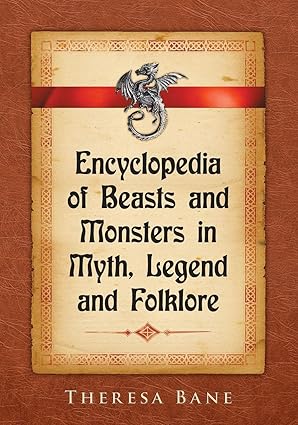
‘Encyclopedia of Beasts and Monsters in Myth, Legend and Folklore‘ by Theresa Bane characterises the indrik as a unicorn-like creature possessing two horns—perhaps owing to a bifurcated single horn being perceived as two separate horns—dwelling in solitude upon the holy and sacred Saint Mountain. Thanks to heritage enthusiast Narayanan, a former Major in the Indian Army, for helping locate this book online. Likewise, ‘The Heroic Ballads of Russia‘ by L. A. Magnus describes the Indrik(h) as “the king of beasts” (page 181) and “the mother of all beasts” dwelling upon the holy mountain (Page 159). Similarly, the Kunlun Mountain, celebrated in Chinese tradition, is sometimes named as the abode of extraordinary beings such as the qilin. Remarkably, as already noted, the sacred Himalayan region is identified in the Nepālā Māhātmya as the realm where Lord Shiva manifested as Pashupati. Perhaps a deeper analysis may reveal that the Saint Mountain and the Kunlun Mountain were merely different names for the true Himalayan Mountains discussed in the article ĀDINATH AND THE ASHTĀPAD, published earlier on this blog.
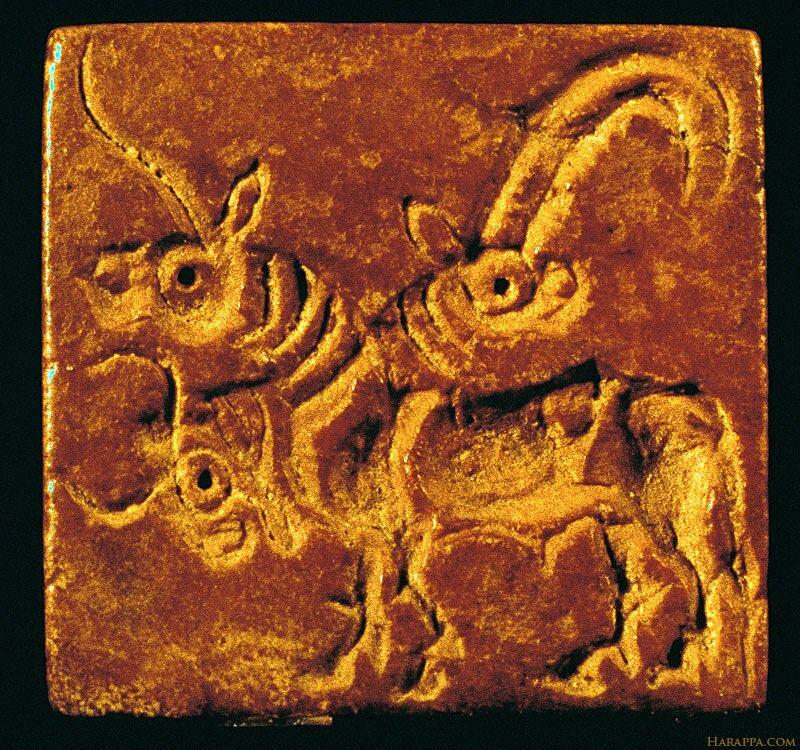
Interestingly, certain Harappan seals—particularly specimens from Mohenjo-daro and the Gujarat region—depict a composite three-headed creature combining the torso, tail, and limbs of the Harappan Unicorn with the heads of a bull, a Harappan Unicorn, and an antelope. Such imagery may plausibly reflect traditional descriptions of the indrik in artistic form, especially since Wikipedia and several other online sources portray the creature as a gigantic bull-like beast possessing the legs of a deer, the head of a horse, and an enormous horn projecting from its head—more specifically from the forehead rather than the snout in certain depictions, such as Image No. 19.
When viewed alongside the Pashupati portrayed in the Nepālā Māhātmya, the narrative in the Shiva Purāna (Section 4, Chapter 19) describing Lord Shiva’s appearance before the Pandavas at Kedar in the form of a buffalo—or a bull in certain folk traditions—indicates that the animal encountered by the Pandavas was likely the one-horned mṛga manifestation of Lord Shiva. Such an interpretation is based chiefly upon the traditional association between Kedarnath Temple and Pashupatinath Temple, as narrated in Purāṇic and folk traditions. This, in turn, suggests that Pashupati was perceived not merely as a kind of deer, but also as a bull, thus linking the indrik and thereby the Harappan Unicorn to Pashupati.
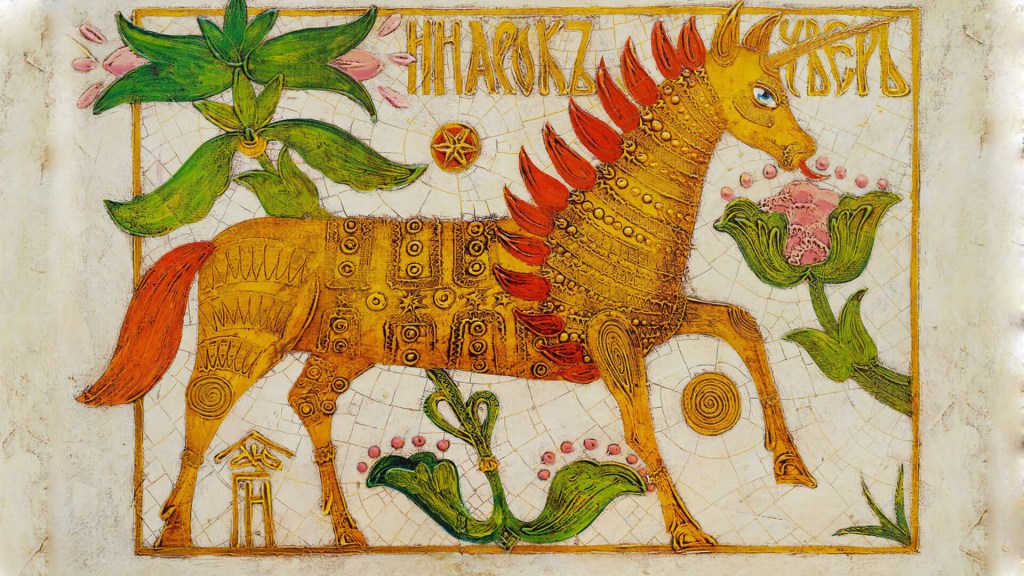
Thus, as indicated by the foregoing discussion, the conceptualisation and characteristics of the Harappan Unicorn appear to correspond closely with both the indrik and the qilin, suggesting that these three traditions may plausibly have preserved cultural memories of Lord Shiva’s manifestation as Pashupati, the “Lord of the animals”, representing a particular unicorn species—called iralai in Tamil and ṛśya in Sanskrit—belonging to what may once have been a shared homeland of their ancestors.
Reality of the ‘Ritual Stand’:
On the majority of unicorn seals, the one-horned creature appears facing the so-called “ritual stand” or “standard”—the object identified as No. 10 in Image No. 20. In certain specimens, however, this hitherto unidentified object is replaced by alternative motifs, including the leaf of a peepal tree, a barren tree-like figure, and an upward-pointing arrow, among perhaps many others. These striking variations seem to provide an important clue not only to the true identity of the so-called “ritual stand,” but also to the significance of the diverse motifs associated with the Harappan Unicorn.

Particularly noteworthy is the first-discovered unicorn seal, illustrated in Image No. 21, in which the conventional object is substituted by a 3×3 grid accompanied by a set of six small circular stone-like depictions in a specific pattern. Fortunately, these unique depictions align with certain information in ‘Remarks concerning the Methodology and Symbolism of Bon Pebble Divination‘, a research article by Alexander K. Smith, thereby throwing light on the otherwise unclear meaning of the peculiar motifs:
Preliminary Information:
1. …the present paper will address a form of pebble divination known as “manifestation of knowledge” (lde’u ‘phrul [pronounced de’u trül]) as it is performed in the contemporary Bon community surrounding sMan ri monastery near Solan, Sirmour District (H.P), India.
2. …the paper will present a discussion of the divination’s symbolism. It will be shown that lde’u ‘phrul employs a wide range of culturally specific metaphors and symbols in the production of its prognostications. Drawing from a pair of lde’u ‘phrul manuals, the paper will attempt to explicate these symbolic configurations and chart their relationship to well known astrological schemas, such as the ‘nine numerological squares’ (sme ba) and the trigrams (spar kha).
3. The monastery is roughly fifteen kilometers west of Solan, south of Shimla in the Shiwalik Hills of the lower Himalayas. sMan ri, founded in 1969, is the largest contemporary Bon monastery and is also the seat of H.H. sMan ri khri ‘dzin Lung rtogs bstan pa’i nyi ma, the head of the Bon religion.
4. There are a number of forms of divination practiced in the broader community surrounding sMan ri…however, the most sought after form of divination is a variant of pebble divination referred to as lde’u ‘phrul, of which the foremost specialist in the community is the monastery’s head educator, the sMan ri Slob dpon ‘Phrin las nyi ma. It is perhaps of note that the majority of the Slob dpon’s clients are from the local community.
Relevant Information:
5. The divination practiced by the sMan ri Slob dpon ‘Phrin las nyi ma is called “manifestation of knowledge” (lde’u ‘phrul). It is important to note, however, that the practice also goes by a number of different names. First of all, the divination possesses the phonetically similar spelling of rde’u ‘phrul (magic pebbles). Secondly, it is not uncommon to hear the divination called “six stones” (rdel drug), though the appearance of this moniker in writing is quite infrequent and carries a very specific connotation.
6. In the performance of a lde’u ‘phrul casting, following the completion of the preliminary recitations, the pebbles are cast upon the mat and divided into nine piles using a simple process of division and subtraction.
7. In my research, I have found that the term “six stones” (rdel drug) appears in a very singular context within lde’u ‘phrul textual sources. In the analytical sections of the texts at hand, the term is used as a preface to the discussion of certain configurations of stones. For instance, one finds the following passage:
“(1.3.2) six stones like this is highest. For whatever mo is cast, this is excellent”.
(132) ‘di ‘dra’i rdel drug rab yin pa’i / ci tab ci yi mo la bzang (MSI, XV).
This passage depicts the horizontal arrangement of three piles of stones numbering one, three, and two as possessing an analytical value that supercedes the symbolic content of each individual pile. In this sense, the term “six stones” is clearly used in the performance of lde’u ‘phrul. Apparently, however, it serves only to characterize the arrangement of particular piles of stones within the divination grid at large.
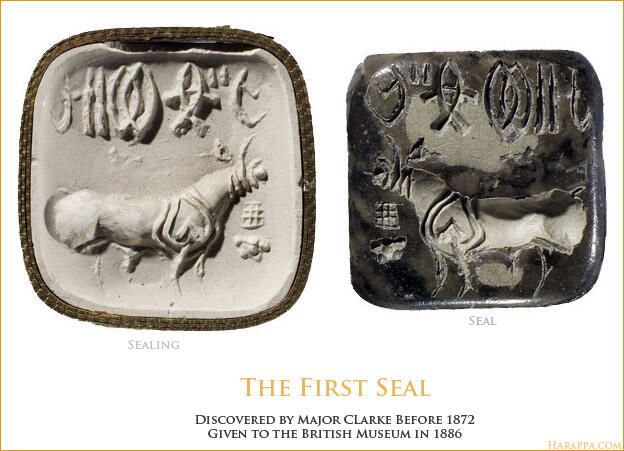
It is particularly interesting to observe that, on this specific seal, the 3×3 grid appears to reflect the lde’u ‘phrul divination grid, while the arrangement of six small circles may be conceptually aligned with the passage, “(1.3.2) six stones like this is highest. For whatever mo is cast, this is excellent,” cited in the article. This correspondence may suggest that the motifs collectively signify ideas of fortune or auspiciousness.
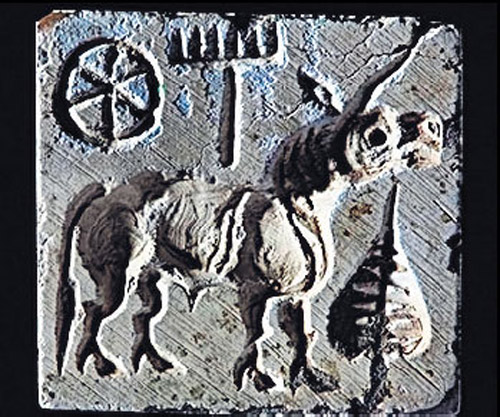
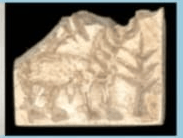
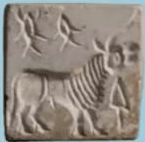
Image 22: Three distinct unicorn seals, in left-to-right order, depicting a peepal leaf, a barren tree, and an upward-facing arrow, respectively, instead of the conventional “ritual stand” or “standard”.
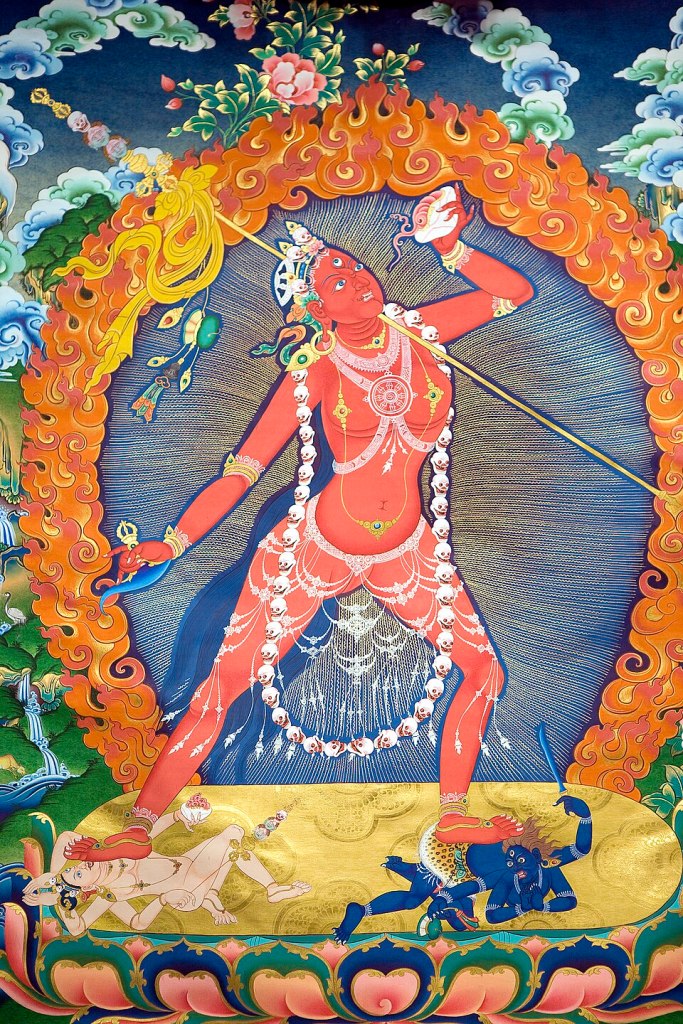
Notably, the peepal leaf, the barren tree, and the upward-pointing arrow may all be understood as motifs expressing aspiration or ascent toward higher powers for material gain or spiritual attainment. This idea is well attested in both Hindu and Buddhist traditions. Incidentally, the Nepālā Māhātmya (Chapter 1) refers to an association between a Buddha—possibly predating Gautama Buddha—and Lord Pashupati, who is also celebrated in the Nepālā Māhātmya and the Shiva Purāṇa as the bestower of the fulfilment of desires, as well as Goddess Vajrayoginī, a principal deity within Tantric traditions that encompass various practices including diverse methods of divination. In the cultural landscape of present-day Nepal, the interweaving of Hindu and Buddhist traditions remains a visible and enduring reality.
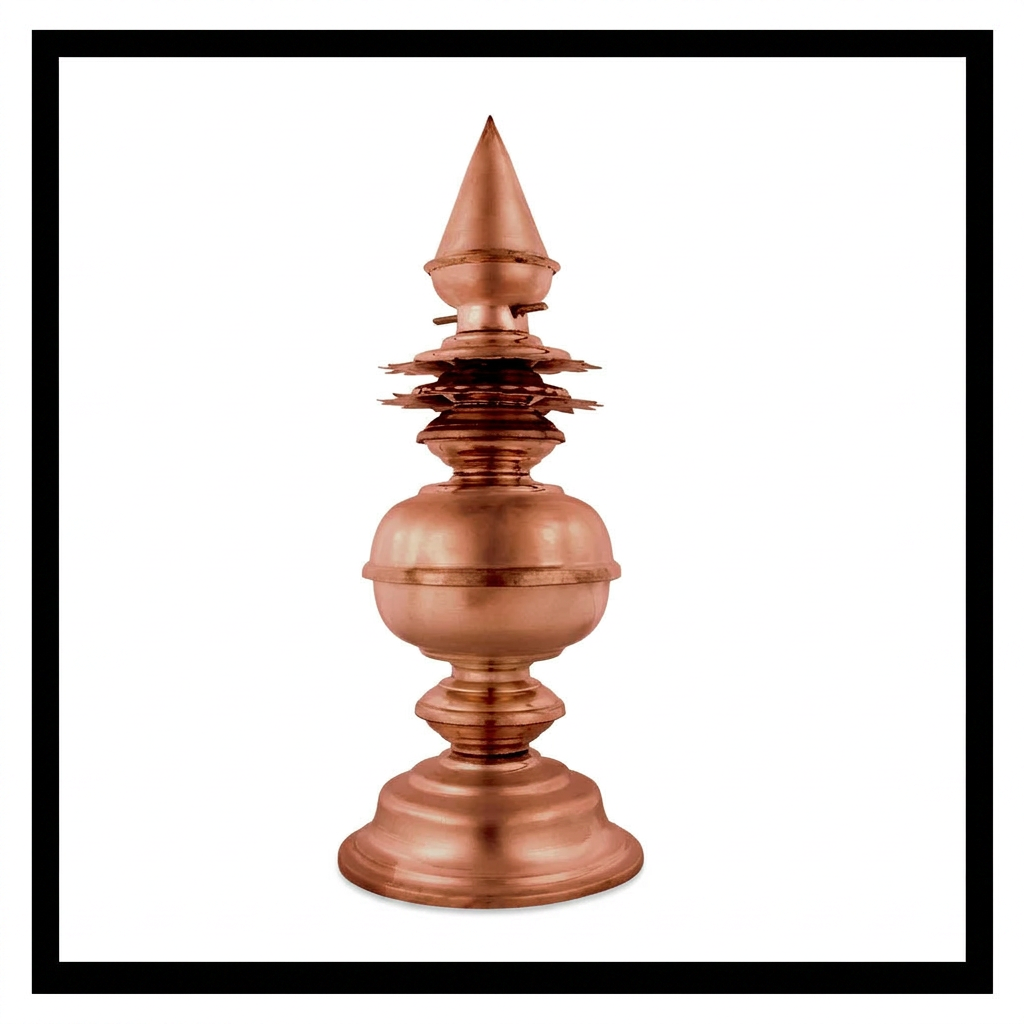
Against this backdrop, the so-called “ritual stand” may most plausibly be identified with a kalasha (kalasam), a widely recognised symbol of auspiciousness in both Hinduism and Buddhism. This interpretation is further supported by apparent visual parallels between the “ritual stand” or “standard” and the Tibetan treasure vase, as well as the finial elements of Tibetan temple architecture, which in turn correspond respectively to the pūrṇa-kumbha and the gopura kalasha or vimāna kalasha in Hindu tradition.
Closing Message:
This article has merely scratched the surface, for many puzzling questions still remain unanswered: the intriguing connection between the Harappans and Lord Pashupati, the presiding deity of Nepal, the probable natural habitat of the Harappan Unicorn, and the reason for the creature’s remarkable popularity, particularly across the northwestern regions of the Harappan dominion. These and several other issues may be explored in Part 2 of this study. Meanwhile, readers interested in the true identity of the central yogic figure depicted on the so-called “Pashupati Seal” may wish to consult PROBING THE PASHUPATI SEAL, an earlier article published on this blog.
End-Note:
Thanks for reading this post; please leave your feedback in the comment box below.
See the Home page for the latest blog posts.
Browse the Blog page to find all the uploaded posts.
Visit the About page for an introduction to the blog.
Explore the Research, Titbits, and Bliss sections of the blog.
Go through the Norms page for the blog’s terms and conditions.
Click Contact to message me or to find me on social media.
And check out the book(s) I have published.

